
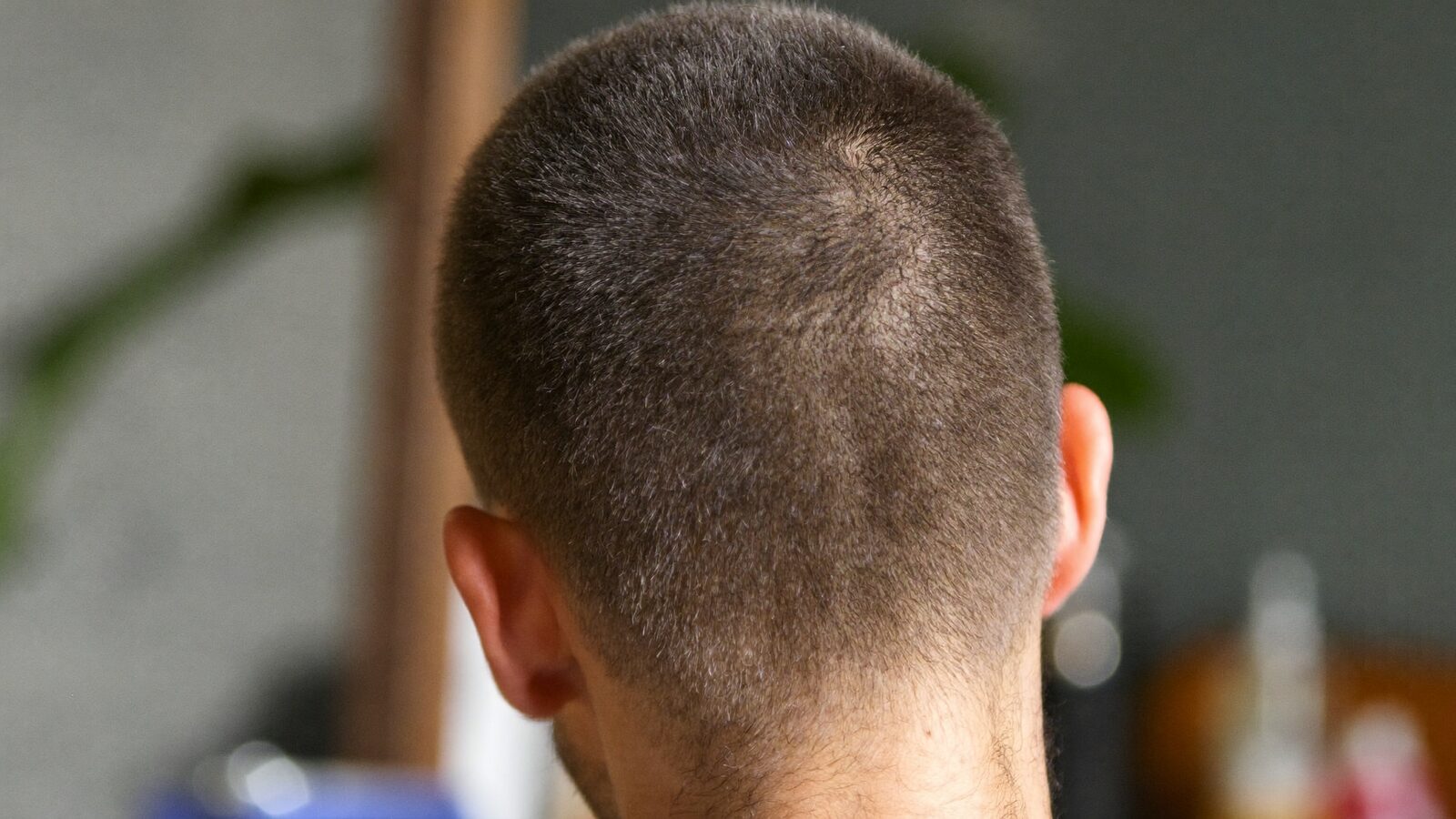
No clinic can honestly promise an unlimited grafts hair transplant, because the number of grafts you can receive is capped by your donor area, the band of permanent hair on the back and sides of your scalp. That supply is finite. Once a follicle is moved, it does not grow back in the donor zone, so every plan draws on a fixed lifetime budget.
Offers built around "unlimited grafts" usually mean one flat price, not an unlimited supply of hair. That can sound generous, but it can also nudge a clinic toward taking more than your scalp can spare. This guide explains how donor capacity is measured, what overharvesting looks like, and how a careful FUE hair transplant in Tennessee is planned to leave hair in reserve for the years ahead.
Key takeaways
- Your donor area holds a fixed number of transplantable follicles, so no hair transplant can offer truly unlimited grafts.
- Donor density is usually measured in follicular units per square centimeter, and it varies a lot from person to person.
- Overharvesting leaves the back of the head looking thin, patchy or moth-eaten, and that damage is very hard to reverse.
- A sound plan keeps a reserve of donor grafts for future hair loss, which often continues for years after surgery.
- Very large cases are safer when split into two sessions instead of pushed into one long day.
What does "unlimited grafts" really mean?
In hair transplant marketing, "unlimited grafts" almost always describes a pricing model: one fixed fee no matter how many grafts are moved. It does not mean your scalp can supply an endless number of follicles. Your donor area sets the real limit, and a responsible plan stays well inside it.
A flat price is not wrong in itself. The concern is the incentive it can create. If the fee is the same whether a clinic moves 2,000 grafts or 4,500, the patient may feel encouraged to ask for the maximum, and the clinic may feel pressure to deliver a big number to justify the package.
The better question is not "how many grafts can I get?" but "how many grafts should I use now, and how many should I keep for later?" Those two numbers are rarely the same.
Your lifetime graft budget
Your lifetime graft budget is the total number of follicular units that can be safely removed from your donor area across every procedure you will ever have. For many men it lands somewhere in the low to mid thousands, but the exact figure depends on donor density, scalp size, hair caliber and how much loss is still to come.
A follicular unit, often just called a graft, is a natural cluster of one to four hairs. Grafts with two or three hairs carry more coverage, so the hair count per graft matters as much as the graft count itself. Two patients with the same number of grafts can end up with noticeably different density.
Think of the budget as a savings account. A first procedure might spend 2,000 to 3,000 grafts on the hairline and front third. If the crown thins later, the account needs enough left to cover it. Spending nearly everything in one session leaves nothing for that second chapter.
Plain rule: the safe number of grafts for today is always smaller than the total your donor area could physically give, because part of that total belongs to your future self.
How is donor density measured?
Donor density is measured by counting follicular units in a small area of the donor zone, usually expressed as grafts per square centimeter. Clinicians often use magnification or a handheld scope, and they also look at hair thickness, the hairs per graft and how wide the safe donor band is around the head.
Typical donor density in adults falls roughly between 60 and 100 follicular units per square centimeter, though some people sit above or below that range. Density alone does not tell the whole story. These factors all feed into a donor assessment:
- Units per square centimeter: how many grafts grow in each small patch of the donor zone.
- Hairs per graft: a donor rich in two and three hair grafts covers more scalp per graft.
- Hair caliber: thick shafts create more visual coverage than fine ones at the same count.
- Safe zone size: the donor band must stay permanent, so the clinic avoids areas that may thin later.
- Signs of miniaturization: shrinking hairs in the donor area suggest it is less stable than it looks.
- Scalp laxity: how flexible the scalp is, which matters if FUT (strip harvesting) is being considered.
Because no two donor areas are alike, a fair graft estimate can only come after a hands-on assessment. A quote given over the phone, before anyone has examined your scalp, is a guess.
What overharvesting looks like
Overharvesting means removing so many grafts from the donor area that it looks visibly thinner than before. The back and sides can appear patchy or see-through, small white extraction scars become noticeable with short haircuts, and the remaining hair may not be dense enough to support any future procedure.
FUE (follicular unit extraction) removes grafts one at a time with tiny round punches. Each extraction leaves a small dot scar that normally hides well under hair. Problems start when extractions are packed too closely or taken from outside the safe band. Many surgeons aim to take only a modest share of the units in any one zone and to spread extractions evenly across the band.
Signs that the donor area was pushed too far often include:
- Uneven density: patches of the back of the head look clearly thinner than the surrounding hair.
- Visible dotting: clusters of white scars show through with a short cut.
- Harvesting outside the band: extractions too low on the neck or too high toward the crown, where hair may not be permanent.
- Limited future options: too little hair left for a second procedure or a touch-up.
Once the donor area is overharvested, there is no easy way to restore it. Some patients look into corrective work, which we cover on our hair transplant repair page, but prevention is far simpler than correction.
Planning for future loss
Planning for future hair loss means designing a hair transplant that still looks natural if the hair around it keeps thinning. That usually involves a conservative, age-appropriate hairline, a graft count that leaves donor reserve untouched, and often medical treatment to protect the native hair that was not transplanted.
Pattern hair loss tends to continue over time, especially for men who start losing hair in their twenties or thirties. A transplant moves permanent hair into thinning zones, but it does not stop the surrounding hair from shrinking. A plan that only looks good today can leave an island of transplanted hair in front of a thinning area ten years later.
This is where hairline position matters. A slightly higher, softer hairline can be refined later, while one set too low uses many grafts and can look out of place as the face matures. Our guide on designing a hairline that suits your face goes into that decision in more detail.
At our Nashville clinic, Dr. Dan Hatef reviews every plan with future loss in mind, and the donor area is protected so a reserve remains. A single day can move up to about 4,000 grafts when donor density allows, and very large plans are split into two sessions so the donor area can heal between them.
Why do some hair transplants fail years later?
Some hair transplants fail years later not because the grafts stopped growing, but because the plan did not account for ongoing loss or used up the donor supply too early. The transplanted hair is usually still there, yet the surrounding hair has thinned and nothing remains to fill the gap.
Common patterns include a hairline placed too low for a maturing face, a front that was filled densely while the crown was ignored, and a donor area spent almost completely on the first session. Each one looks fine at the 12 month mark and becomes a problem as loss continues. Our post on what makes a hair transplant look natural or obvious shows how these choices affect the result over time.
Graft handling also matters. Follicles that spend too long outside the body, dry out or are damaged during extraction (called transection, when the follicle is cut) may not grow well. Rushing a very large number of grafts in one day raises that risk, which is another reason a sensible session size beats a headline number.
How do you compare an unlimited offer with a donor-based plan?
To compare an unlimited graft offer with a donor-based plan, look past the price and ask how each one decides the graft count, protects the donor area, and plans for future loss. A donor-based plan explains its numbers; a flat package often cannot.
| Question | Typical "unlimited" package | Donor-based plan |
| How is the graft count set? | As many as possible in one day | From a measured donor assessment and your goals |
| Is a donor reserve kept? | Rarely discussed | Yes, a portion is set aside for future loss |
| What if more grafts are needed? | Pushed into one long session | Split into two sessions with healing in between |
| How is the price explained? | One flat fee | Per graft or total, in a written quote |
| What about future loss? | Often not addressed | Built into hairline design and graft planning |
Questions worth asking any clinic include: How many grafts do you estimate my donor area can give over my lifetime? How many will this session use? How many stay in reserve? What happens if my crown thins in five years? You can see how we answer those questions on the Nova Medical FUE protocol page, and our post on FUE myths and facts clears up other claims that tend to come with high-graft offers.
Find Out What Your Donor Area Allows
Book a free assessment in Nashville. We will measure your donor density, explain your lifetime graft budget and give you a written plan and price.