
FUE Tennessee
FUE Tennessee: Follicular Unit Extraction in Nashville
FUE, or Follicular Unit Extraction, removes and places grafts one follicle at a time. FUE Tennessee at Nova Medical Hair Transplant in Nashville is aimed at patients who want a natural hairline, no linear scar and a recovery that fits around work and family.
Every FUE plan gives equal weight to surgical precision and aesthetic detail. The aim is to restore density so it looks as though your own hair has always grown there. Strong donor hair is chosen first, usually from the back or sides of the scalp, where follicles hold up better against thinning.
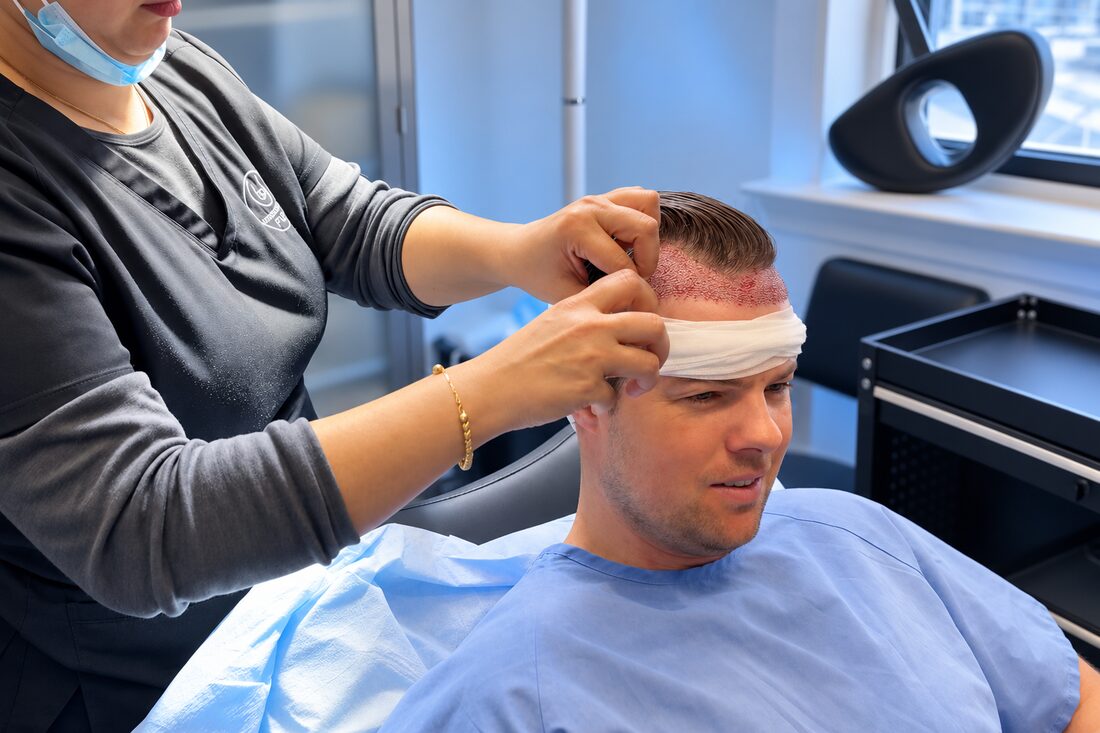
Grafts are then lifted out individually with fine instruments designed to limit trauma to the scalp, so there is no long strip incision and no linear scar to hide. For anyone who keeps the back and sides short, or who simply wants a more private recovery, that difference matters.
Patients from across Tennessee, and some travelling from other states, begin with a consultation at our Nashville clinic. Dr. Dan Hatef reviews and approves each plan before a date is set: how many grafts your donor area can safely give, where the hairline should sit for your face and age, and which zones are treated first.
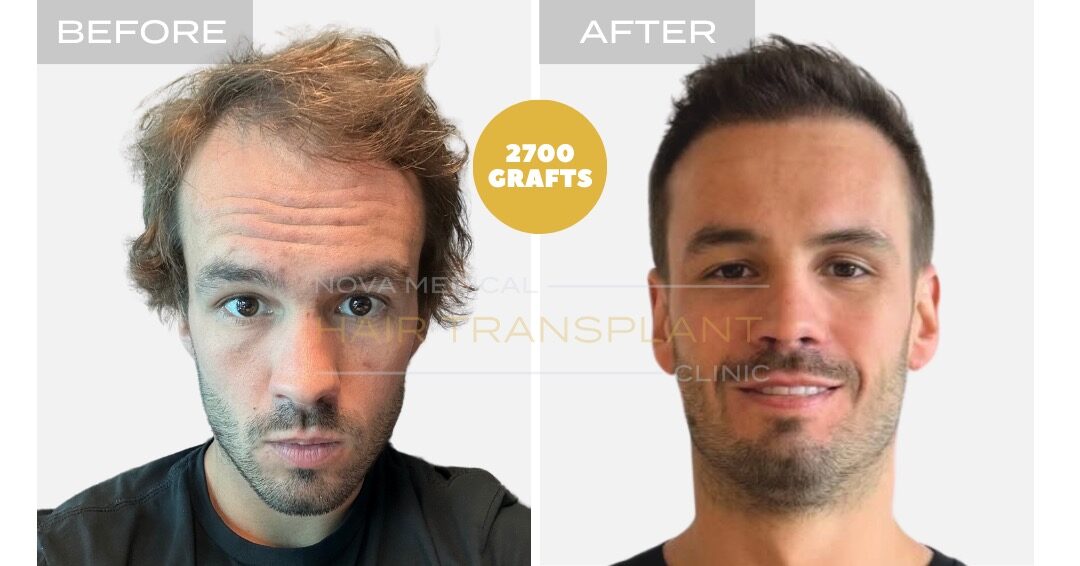
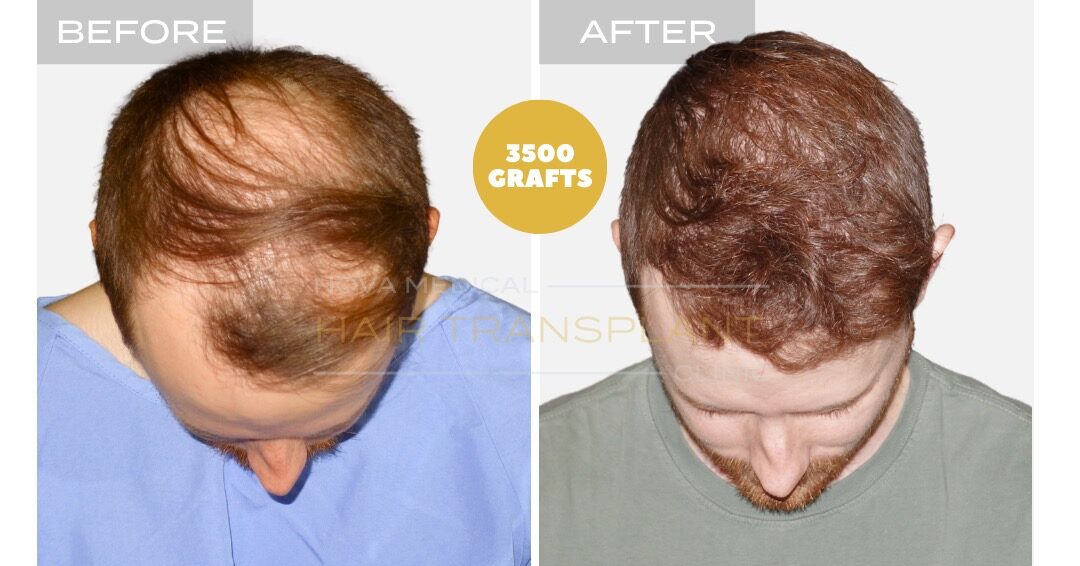
Before & After Gallery
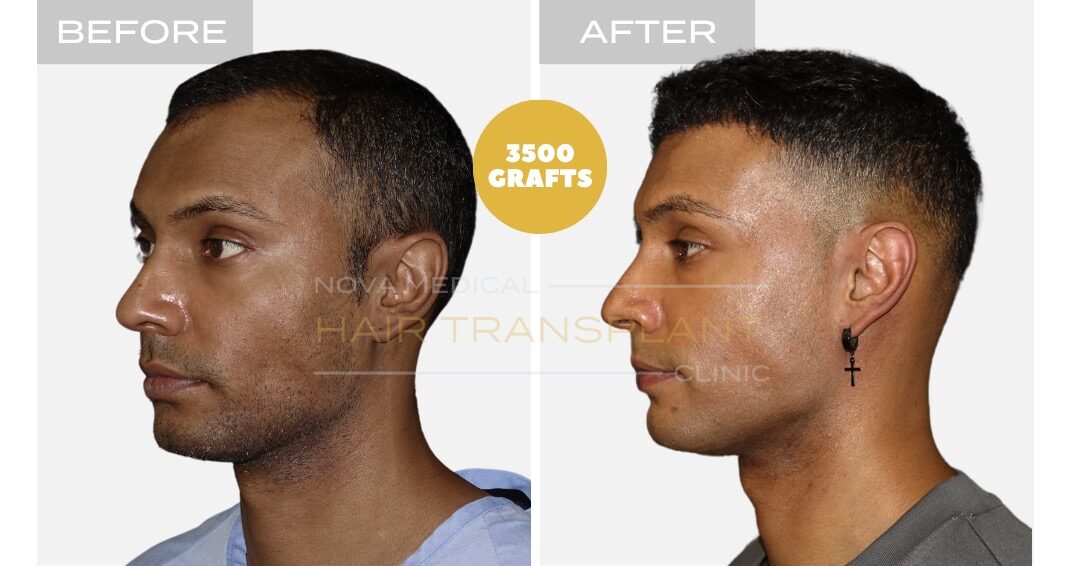
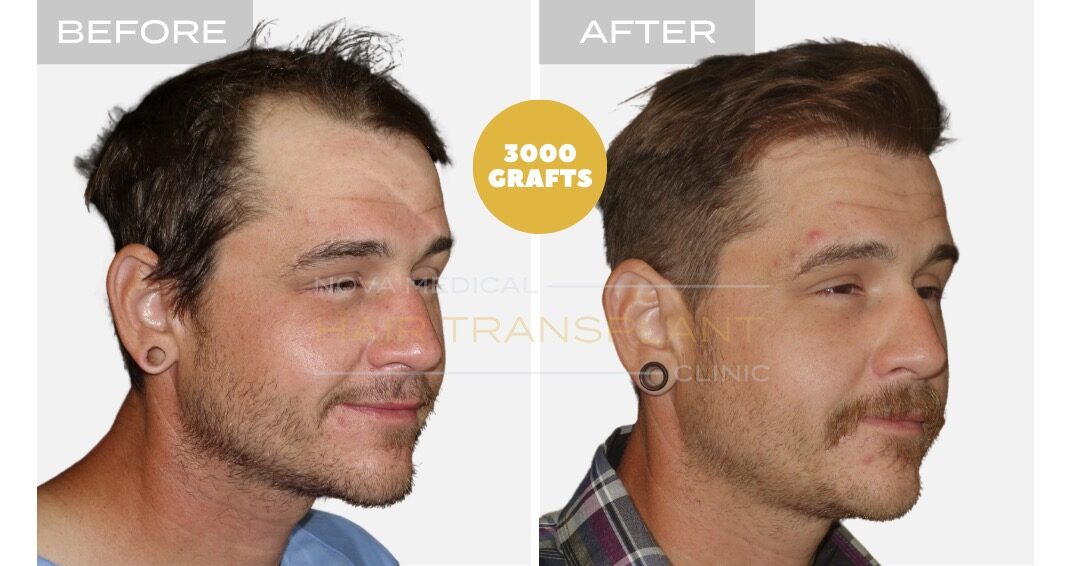
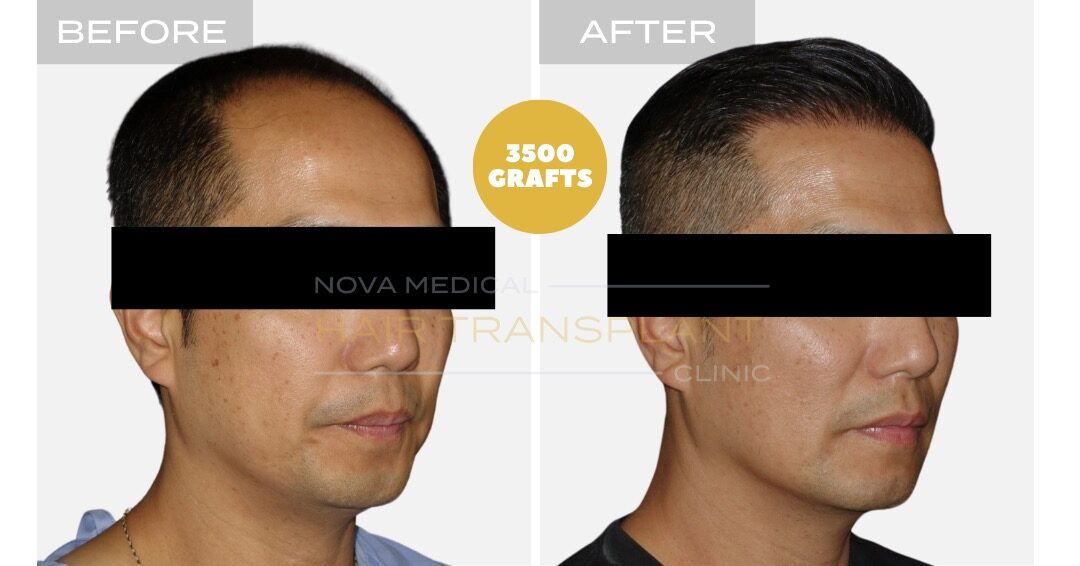
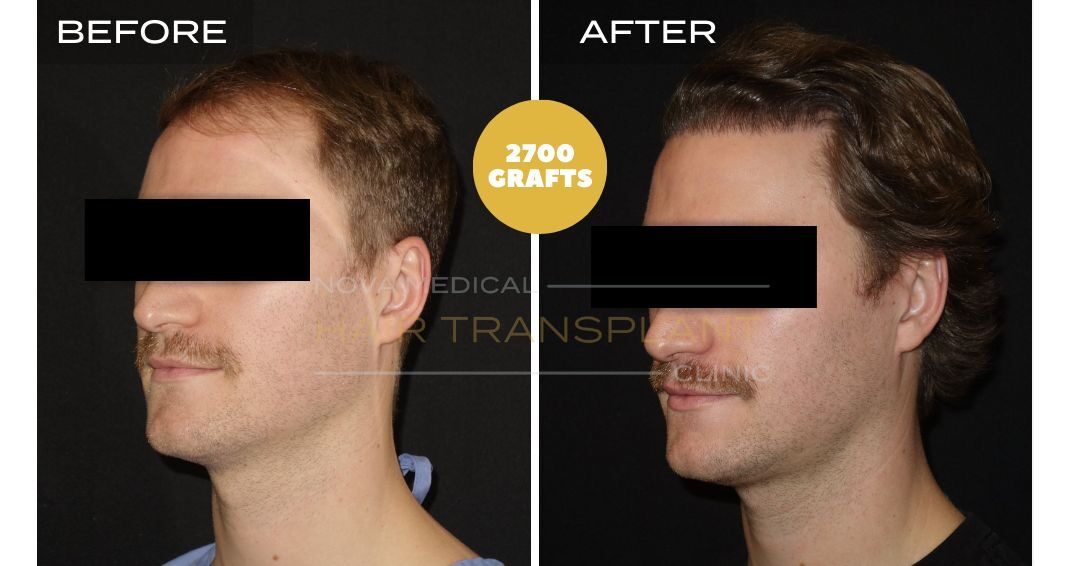
The FUE Process, Step by Step
-
1
Consultation in Nashville
We look at your pattern of loss, the strength of your donor hair and your hairline goals, then tell you plainly whether FUE Tennessee is the right fit or whether another method would serve you better.
-
2
Donor Harvesting
Once the donor area is numb, grafts are taken one by one with a fine punch. Quality is protected at every step, and the small openings close on their own without stitches or a linear scar.
-
3
Hairline Design
The front edge is mapped around your face, age and natural growth pattern. It is drawn on for you to review in a mirror and only finalized once you are happy with where it sits. This is where artistry matters.
-
4
Implantation
Each graft is set by hand into a tiny recipient site that follows the direction, spacing and density of the hair around it, so the finished area reads as your own growth.
-
5
Recovery and Growth
Healing is usually quick. The transplanted hairs often shed in the first weeks, early regrowth tends to appear within a few months, and the result keeps maturing for twelve to eighteen months.
FUE Tennessee Cost and Financing
The cost of FUE in Tennessee is customized to the surgical plan. The main factors are graft count, hairline design, density goals, donor strength and whether you have had earlier procedures.
Some patients need only a focused hairline refinement. Others need wider coverage through the front, mid-scalp or crown. That is why a real quote has to be based on your anatomy and goals rather than a generic package.
Our Nashville team prices FUE per graft, from $3.99 to $7.99 each, and most cases total between $4,000 and $15,000. There are no session fees on top.
Financing at 0% for the first 12 months can spread the payments. Your free assessment ends with a written hair transplant cost estimate based on the graft count you actually need, so you know what the investment looks like before anything is booked.
Request a Free Consultation
No obligation • Free assessment
How Long Does an FUE Procedure Last?
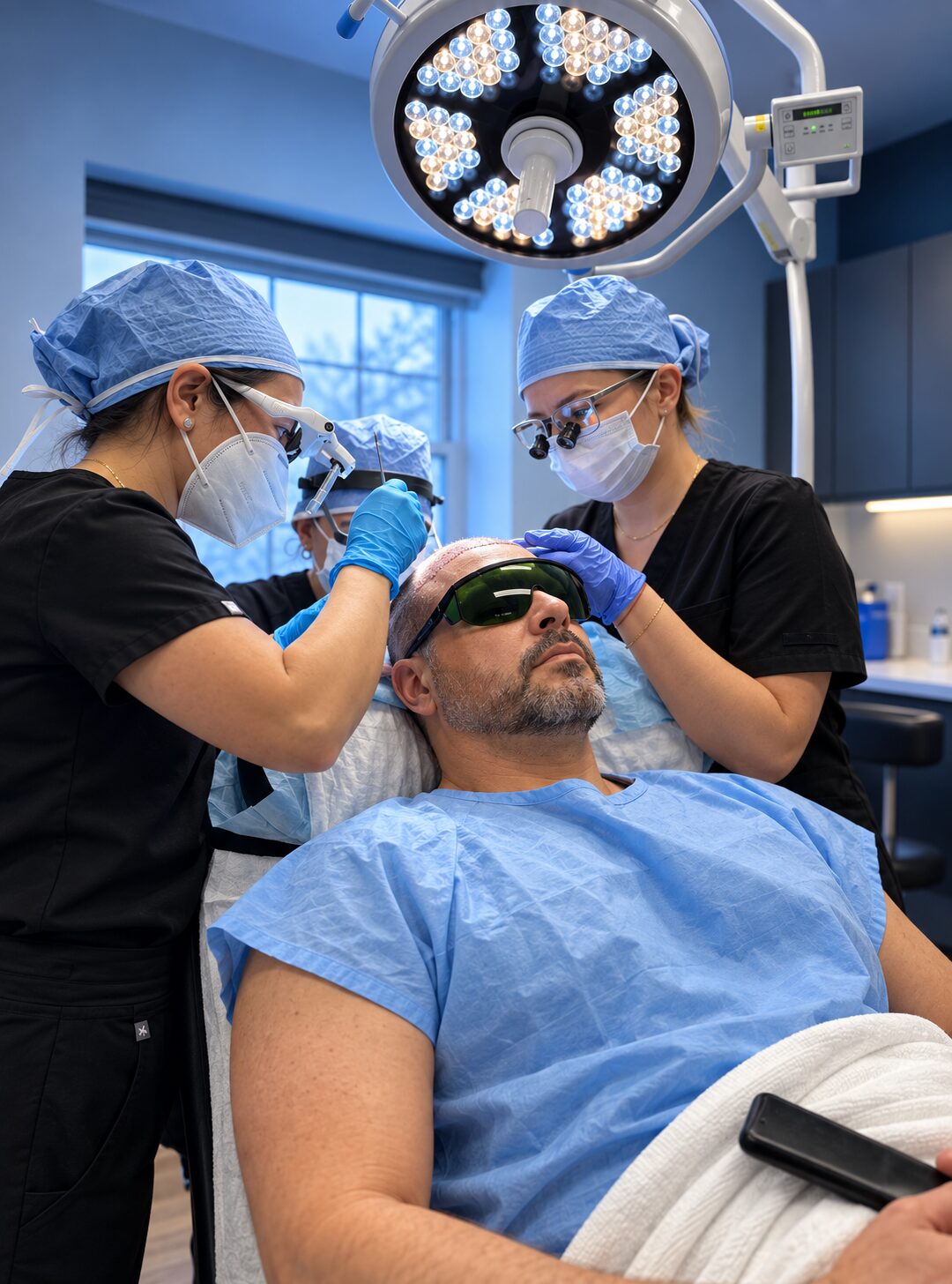
Most FUE procedures in Tennessee take between 4 and 10 hours, depending on how many grafts are being moved. A small refinement case moves faster, while a larger session in the 2,000 to 2,500 graft range can run close to 10 hours and fill most of the day.
Even though the work is detailed, the day is usually more relaxed than patients expect. You can listen to music, watch something, take breaks and settle in while the team works methodically.
Lunch, snacks and regular pauses are built into the schedule. Our goal is to make the process feel private, organized and comfortable from start to finish.
Is FUE the Right Fit for You?
FUE Tennessee is often a strong option for patients who want a minimally invasive procedure, a natural hairline and the freedom to wear their hair short without a linear scar.
It works especially well for people with good donor hair who want to rebuild the hairline, fill thinning zones or treat small to moderate areas of loss discreetly. Many patients in Middle Tennessee are after a subtle improvement rather than an obvious change, and FUE suits that goal.
Healthy donor density, a healthy scalp and realistic expectations matter more than any single number. Nova Medical offers both FUE and strip surgery, so if another method would serve your goals better, we will say so.
The same extraction method can add hair to beards, mustaches and sideburns, or rebuild thin eyebrows. Because the donor marks are tiny dots rather than a line, a short haircut stays an option afterward. A consultation and donor evaluation is the surest way to know whether FUE is right for you.
- Men whose hairline is moving back, or whose crown or mid-scalp is thinning
- A pattern of loss that has been fairly stable for at least a year
- Enough healthy follicles at the back and sides to spare for grafting
- Good overall health, and readiness to avoid smoking around the surgery
- Density goals that match the donor supply you have
- Women with a high forehead, traction thinning or patches caused by scarring
Benefits of FUE Hair Transplantation
Because grafts are moved one follicle at a time, FUE gives patients in Nashville a way to restore hair while keeping the donor area discreet and the result natural.
No Strip Incision
FUE removes follicles with a tiny punch instead of cutting out a band of scalp, as strip surgery does. With no long wound to close there are no stitches, and most patients describe the day as easier than they expected.
No Linear Scar
FUE does not create the long donor scar linked with strip surgery. The extraction points heal as scattered dots that are hard to see, which makes it a strong option for anyone who wears the back and sides short or clipped.
Minimal Downtime
Recovery is usually straightforward. The extraction sites close on their own within days, and many patients are back at a desk shortly after surgery, which suits busy schedules.
Natural Hairline Design
Because grafts are placed one by one, the hairline can be built with softness, irregularity and realism. Each follicle is set at the angle and direction of your existing hair so the new growth blends in.
Permanent Hair Growth
Grafts come from stable donor zones that resist DHT-driven thinning. They keep that resistance after the move and continue to grow in their new location.
Flexible for Many Goals
FUE can treat hairlines, thinning frontal zones, the crown, facial hair and old scars. It handles straight, wavy, coarse and tightly curled hair when the punch follows each follicle's curve under the skin.
How FUE Works at Our Nashville Clinic
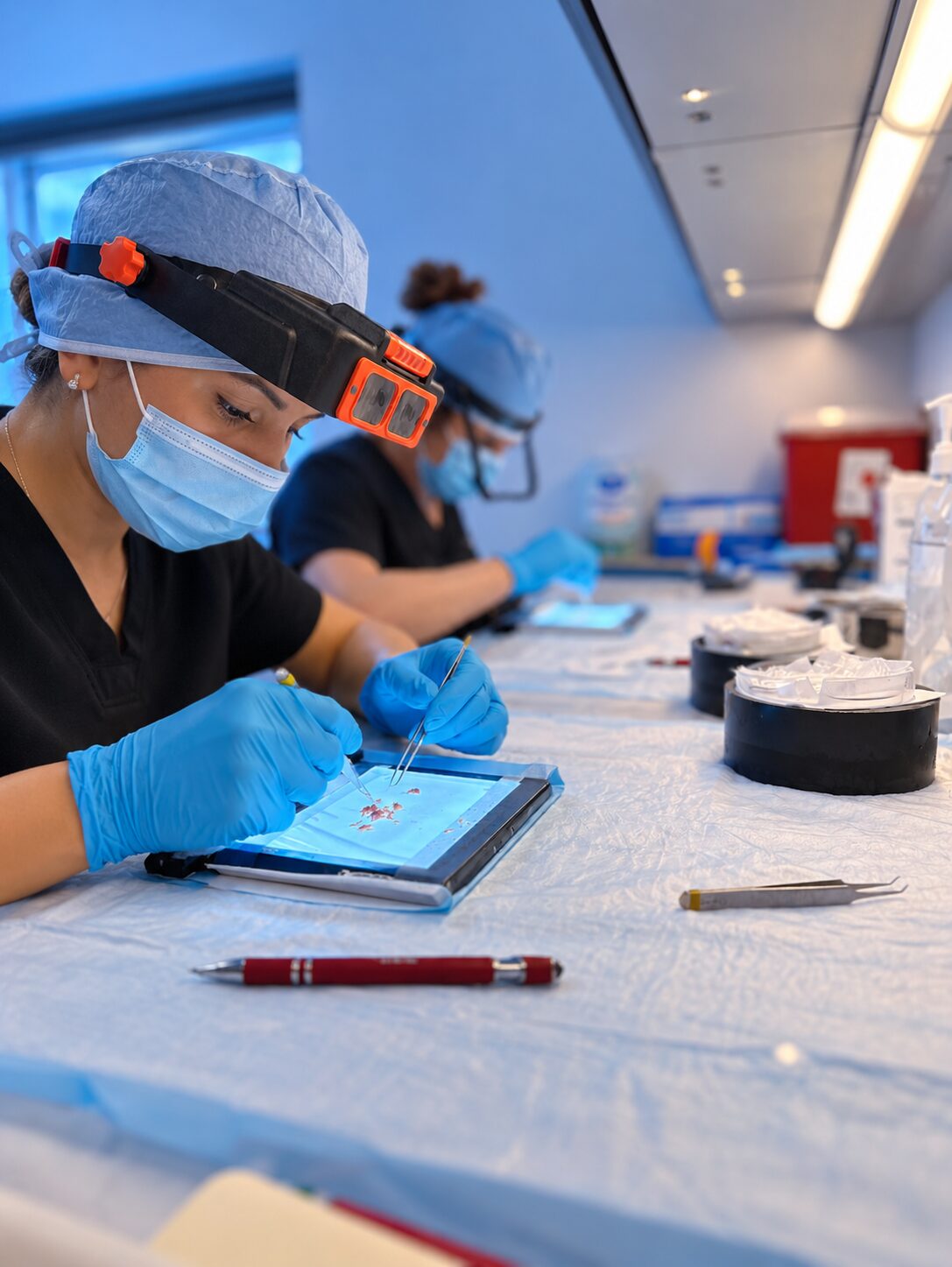
At Nova Medical Hair Transplant Tennessee, extraction is done by hand, one follicular unit at a time, with the team working under magnification. After harvesting, grafts are kept organized by size and placed with microsurgical instruments into the hairline and any thinning zones mapped during planning.
Patients who had an older strip procedure often come in wanting one thing: a donor scar that is less visible. FUE can soften that line by placing healthy follicles directly into the scar tissue, and because it does not create a new linear scar, it is well suited to revision work.
The goal is not just coverage but blending, so the area looks more uniform when the hair is cut short. Each revision is planned around the width, texture and condition of the scar. Our hair transplant repair page explains how those cases are assessed.
Many men choose FUE over the FUT strip method for the same reason: no new line to hide, a quicker return to routine and the option of keeping a close cut.
Why Choose Us for FUE Hair Transplants in Tennessee?
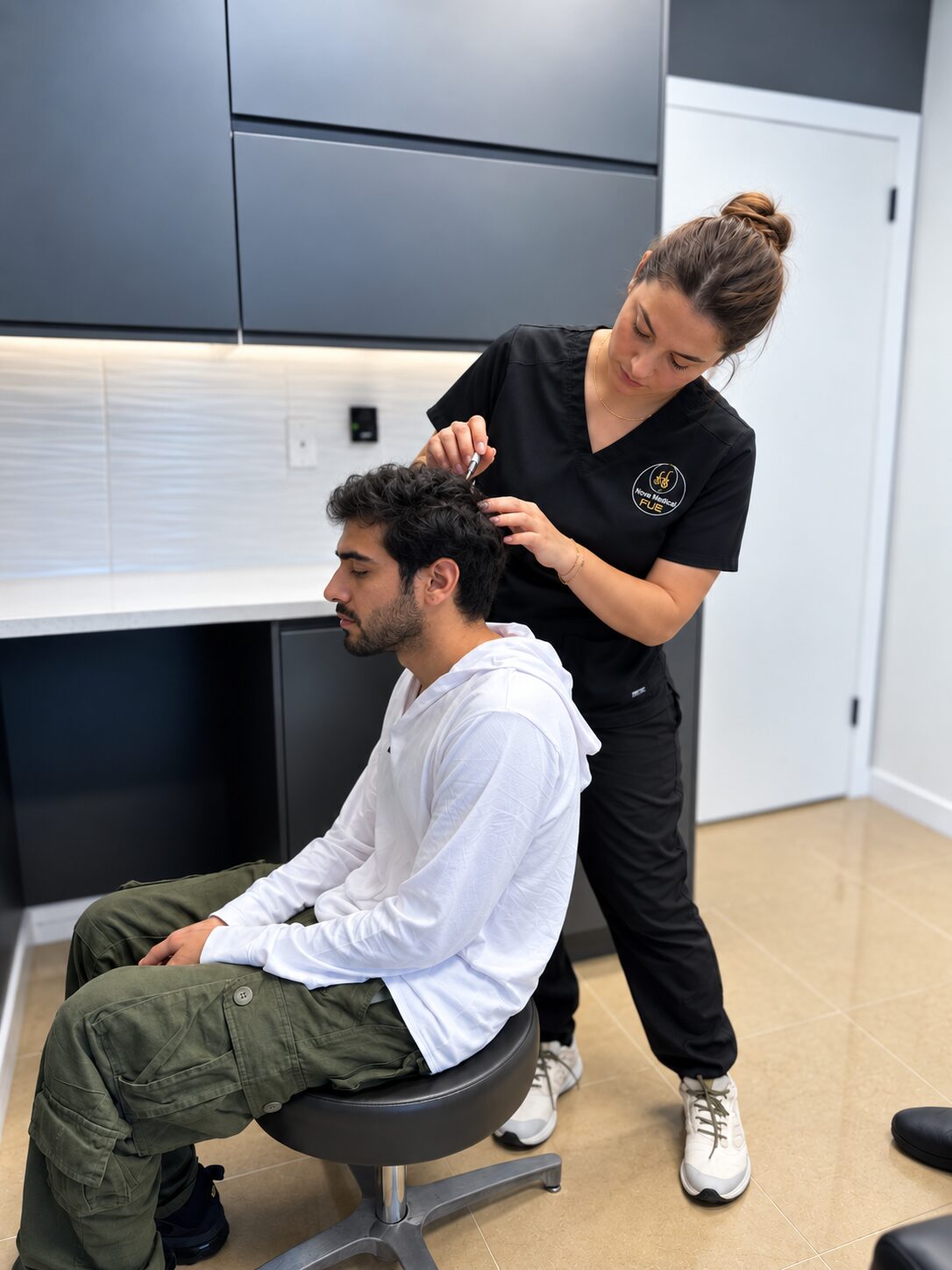
Choosing where to have a hair transplant is personal. You want a clinic that understands the difference between simply moving grafts and designing a result that looks undetectable.
At Nova Medical Hair Transplant in Nashville, our focus is discreet, natural work. That means careful consultations, realistic planning and surgical work that respects your donor supply and your long-term appearance. Dr. Dan Hatef directs the planning for every case.
As part of the Nova Medical network, our clinic pairs local access in Davidson County with shared systems built around consistency, detail and patient trust.
We also offer restoration options beyond FUE, so treatment plans are built around the patient rather than forcing every case into the same procedure. Options at our hair transplant clinic in Tennessee include DHI, beard and eyebrow transplants and female hair restoration.
Every case follows the Nova protocol, from the first scalp assessment to the aftercare check-ins.
If you want care that patients are happy to recommend and results that do not look overdone, book a private consultation with our Nashville team.
How to Prepare for FUE in Nashville
-
1
Medications and Supplements
Unless your doctor tells you otherwise, pause anti-inflammatory drugs and supplements that raise bleeding risk, such as vitamin E, B vitamins and herbal products, for about 7-10 days beforehand. We send specific guidance before surgery.
-
2
Smoking and Alcohol
Tobacco and alcohol interfere with circulation and healing, so stop both for at least a week before treatment.
-
3
Scalp Preparation
Wash your hair thoroughly on the morning of the procedure and leave out gels, sprays and other styling products. A clean scalp helps set up the day well.
-
4
What to Wear
Pick loose clothing and a shirt that buttons or zips at the front, so nothing has to be pulled over the grafts on the way home.
Your FUE Recovery Timeline
- Day 1
You leave the clinic with a light dressing on the donor area and written post-op instructions. Keep the grafted zone clean and moist with the prescribed spray. Mild swelling, tightness or tenderness is normal.
- Day 2
The donor dressing can come off. Most patients feel well enough for light daily activity or desk work, and any soreness is usually manageable with the prescribed medication.
- Days 3-5
Swelling may peak in this window and can drift toward the forehead or cheeks before it fades. Redness and early scabbing are expected, and gentle washing begins as instructed.
- Days 5-7
The scalp starts to settle and most patients feel close to normal, so going back to work is usually comfortable. Keep washing gently the way we showed you.
- Days 7-10
Scabs begin to shed. Washing can become more normal, with light fingertip massage to loosen what remains, and light exercise can return.
- Days 14-21
Most scabs are gone, and the transplanted hairs often shed as the follicles enter a resting phase. This is expected. More demanding activity, including swimming, can usually resume.
- Months 3-6
New hair starts to come in. Early growth may look uneven at first before it thickens, so patience pays off here.
- Months 12-18
The result matures, with improved density, texture and softness through the hairline.
- Weeks 1-4
Important note: skip heavy lifting and intense workouts for the first four weeks, then ease back in. Following aftercare closely gives your grafts the strongest chance to heal and grow.
After Your FUE Procedure: Recovery and Results
One of the main reasons patients choose FUE Tennessee is the recovery. There are no stitches from a strip incision, so there is no suture-removal visit, and most people are back to normal day-to-day activity quickly, often the next day.
The donor and recipient areas form small scabs that usually heal within days. Leave them alone: they shed naturally within about a week, and the transplanted follicles then move into a resting phase before new growth begins.
Once healed, the extraction points fade into the surrounding hair, which is why short styles stay possible.
For the first week, avoid hard exercise, strong sun and anything that makes you sweat heavily. We explain how to wash your scalp gently during this period and stay available by phone if questions come up.
Shedding in weeks two and three is normal. Fresh growth tends to appear after three to four months, and the full result usually shows between 12 and 18 months. For most patients the downtime is manageable and the aftercare is straightforward as long as instructions are followed closely. Our hair transplant recovery guide covers each stage in more depth.