
FUT Hair Transplant Tennessee
High-density hair restoration for patients who need efficient graft coverage and natural-looking results
FUT Hair Transplant Tennessee patients at Nova Medical in Nashville usually come to us when graft numbers matter, density is the goal or keeping longer hair is important. Follicular Unit Transplantation removes a narrow band of donor scalp from the back of the head, divides it into grafts and moves them to thinning areas in one planned session.
Often called strip surgery, FUT is designed for patients who want a permanent result planned with precision, not guesswork.
Because a single strip can supply a large number of grafts, it is often the efficient route for advanced loss. The trade-off is a fine line at the donor site, which the surrounding hair normally covers. If you would rather have no line at all, compare it with FUE in Tennessee.
Patients from across Tennessee start with an assessment at our Nashville clinic, and Dr. Dan Hatef signs off on every strip plan in advance, including how wide the strip can safely be for your scalp laxity and how the grafts should be divided between the hairline, mid-scalp and crown.
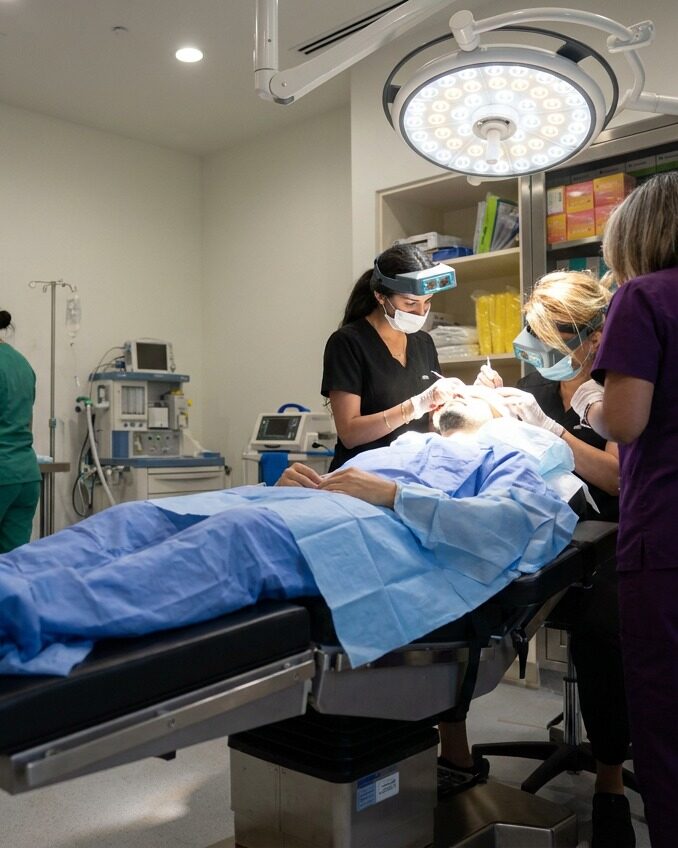
After the strip is taken, the donor edges are closed so the line heals flat and narrow. The tissue then moves to the graft bench, where technicians split it under microscopes into natural groupings of one to four hairs; keeping those groupings intact lets the new hair match the texture of the hair beside it.
Before & After Gallery
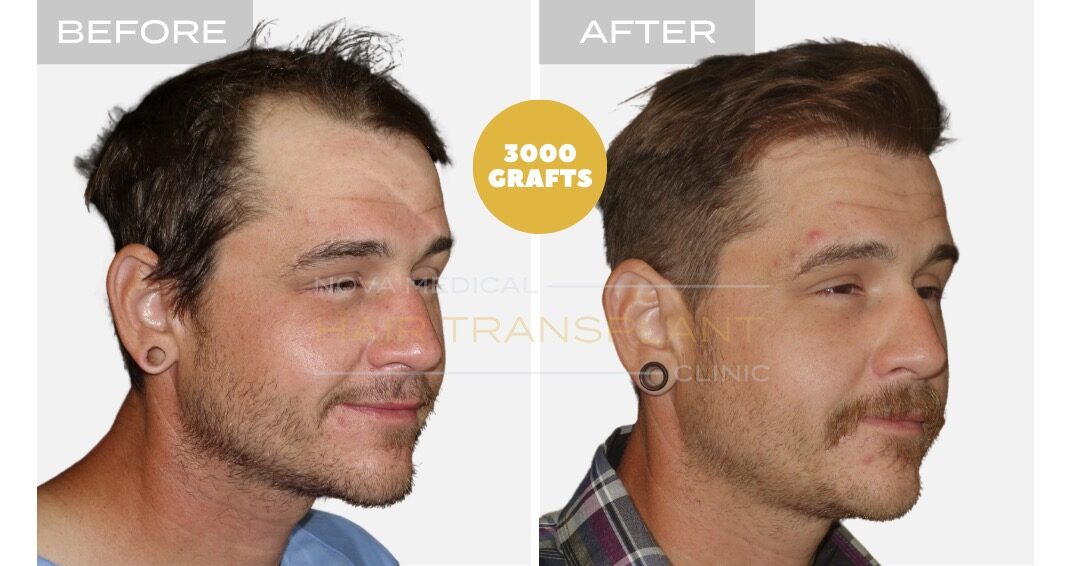
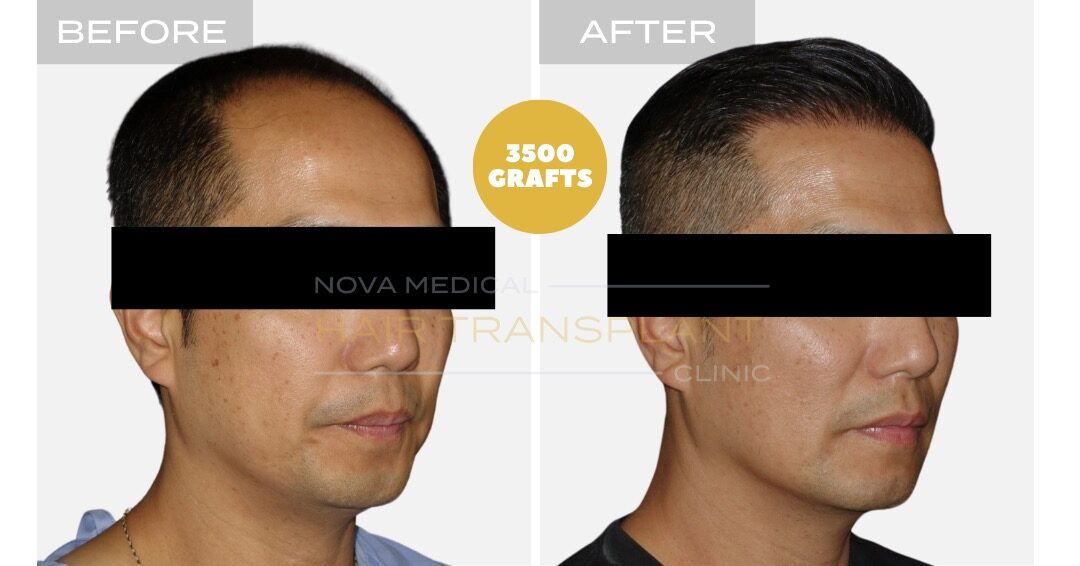
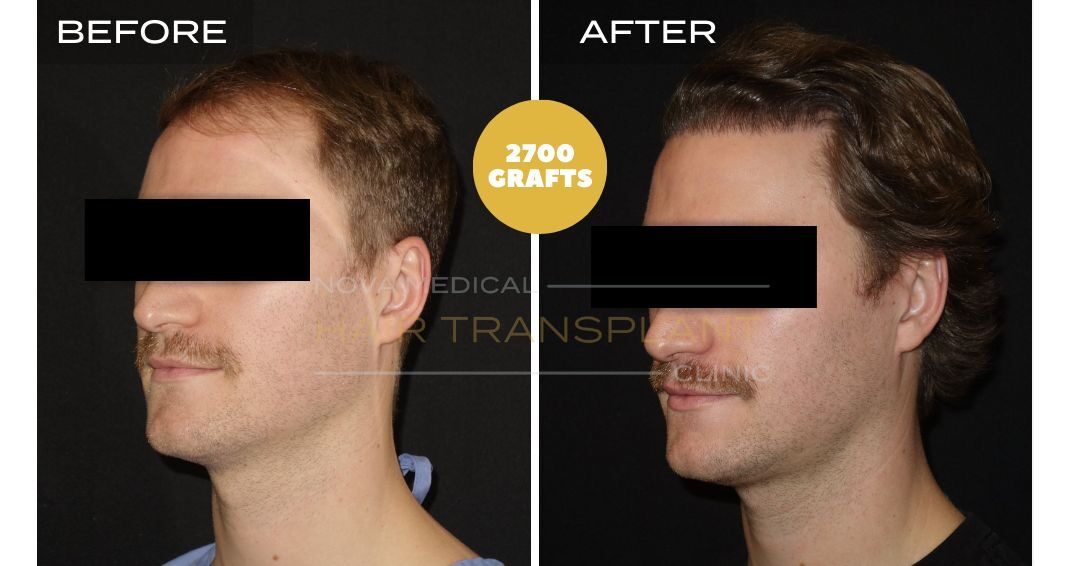
Your FUT Day, Stage by Stage
Strip surgery is a staged procedure built for efficient harvesting and strong cosmetic density, which matters most for patients with significant loss. Here is how the day, and the months after it, unfold:
-
1
Consultation and Donor Review
We examine your loss, scalp health and general health, check the laxity and density of the donor zone at the back of the head, and explain what FUT can realistically achieve for you. You leave with written pre-op instructions, including what to pause before surgery.
-
2
Donor Strip Removal
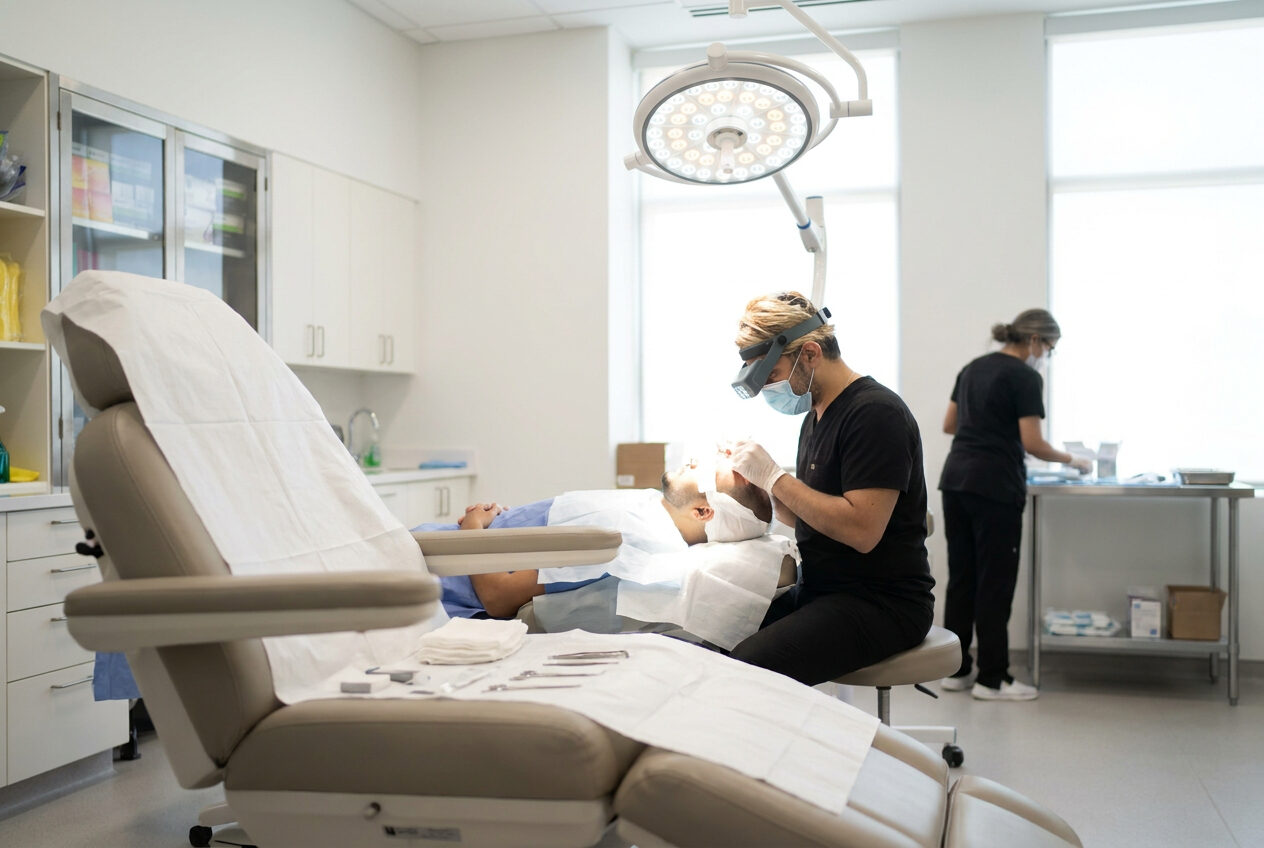
Once local anesthetic has numbed the donor and recipient areas, a narrow strip of tissue is taken from the back of the scalp, where hair is usually strongest and most stable. The wound is closed with sutures, leaving a fine line that the hair above it covers.
-
3
Microscopic Graft Dissection
Technicians divide the strip into follicular units under magnification, so graft quality is preserved from start to finish. Most units hold between one and four hairs.
-
4
Precision Implantation
Small recipient sites are opened in the thinning zones, and grafts are placed into them following natural hair direction, spacing and density, so the new hair blends with what is already there.
-
5
The First Two Weeks
You go home with aftercare instructions. Mild swelling and soreness usually ease within a week, and the donor sutures come out 10 to 14 days after surgery. Shedding of the transplanted hairs in the first weeks is expected.
-
6
Final Results
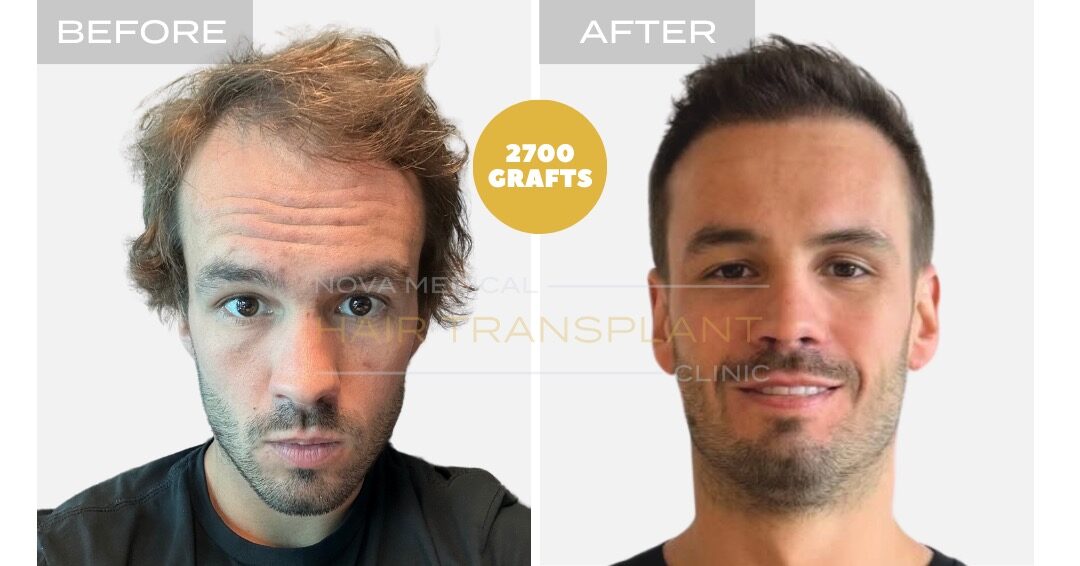
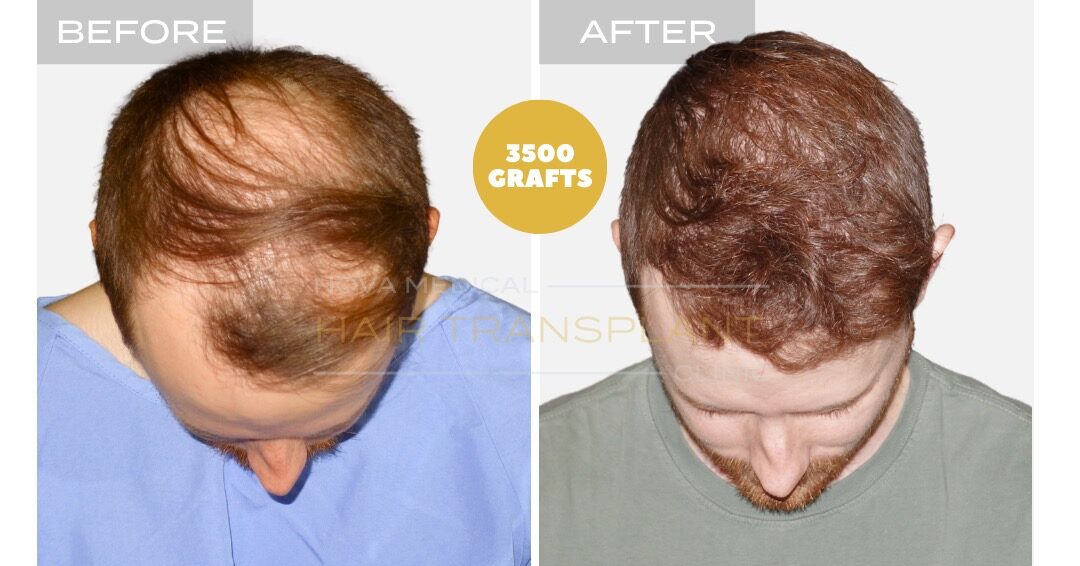
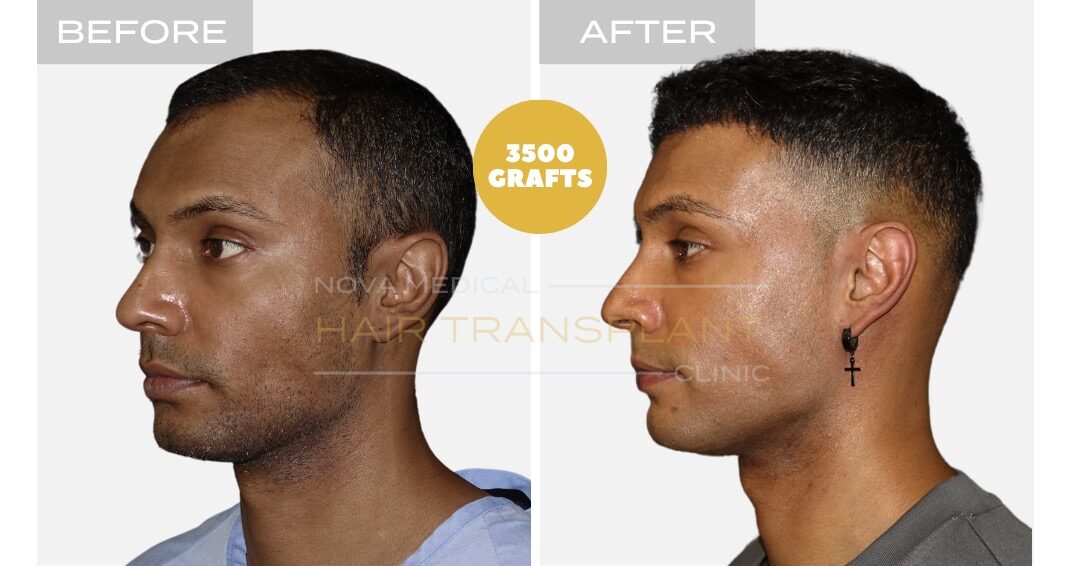
Regrowth begins within a few months, and the full result shows at 12 to 18 months, when the new hair can be cut and styled like the rest. Some patients pair surgery with PRP treatment to support the native hair around the grafts.
FUT Hair Transplant Tennessee Cost
In Nashville, each FUT graft is billed at between $3.99 and $7.99. Your total depends on the number of grafts and the complexity of the case, and most strip procedures fall between $4,000 and $15,000, with no extra session fee.
Since one strip can deliver thousands of grafts in a sitting, larger FUT cases often cost less per graft than covering the same zone with FUE, a gap most noticeable for patients restoring the whole crown and top. Our hair transplant cost Tennessee page sets out the numbers in full.
Once Dr. Hatef has assessed your donor area, you get the graft count and price in writing and are free to take time to decide. A 0% financing plan covering the first 12 months can spread the cost.
Request a Free Consultation
No obligation • Free assessment
How Long Does Strip Surgery Take?
Set aside a whole day at our Nashville clinic. Strip cases usually run from four to ten hours, and the graft count drives the timing, since each follicular unit is trimmed and placed by hand.
Breaks are scheduled through the day, with lunch and snacks provided. Many patients bring headphones, and most find the hours pass more easily than they feared.
Because only local anesthetic is used, you stay awake and can chat, rest or watch a show while the team works.
Who Is FUT Suited To?
Strip surgery is not right for everyone. Many FUT patients in Tennessee are not chasing trends; they want the procedure that gives the most meaningful cosmetic return for their pattern of loss. It most often suits people who:
- Have advanced loss over the top and crown, around Norwood V or beyond
- Want a large graft count in one day rather than several shorter sessions
- Have enough laxity at the back of the scalp for the strip to close neatly
- Keep the back long enough to cover a fine donor line, including women who want to keep longer styles
- Want maximum coverage within their budget
- Have had FUE in the past and want to use the remaining donor hair efficiently
Why Patients Choose FUT
FUT remains relevant because it solves a different problem than FUE. It is not about being newer or lighter. It is about harvesting efficiently when density, donor conservation and case scale are the real priorities.
At our Nashville clinic, strip harvesting is offered next to FUE so the choice follows your donor supply and coverage goals. For the right patient, FUT is not a compromise. These are the reasons people choose it:
High Graft Yield
A single donor strip can provide thousands of grafts, which often makes it the better option when a large session is needed.
Lower Price per Graft
Collecting many grafts in one harvest usually brings the per-graft cost down on bigger cases.
Dense Coverage
Well suited to moderate and advanced loss, including Norwood V to VII patterns, where a wide area needs volume.
No Full Head Shave
Only the strip zone is trimmed, which matters to women and to anyone who keeps longer hair.
Efficient Donor Use
Strip harvesting makes careful use of the donor area, a strong point when long-term donor planning matters.
Permanent Growth
Transplanted follicles keep growing in their new location, and one recovery period covers most of the work.
FUT or FUE: Which Fits?
FUT - Follicular Unit Transplantation
- Donor strip removed, then dissected into individual grafts
- Usually a lower cost per graft on large cases
- Often no full head shave required
- Suits higher graft counts, advanced loss and long-hair patients
- Fine linear scar, usually hidden by surrounding hair
- Strong graft yield and efficient donor harvesting
FUE - Follicular Unit Extraction
- Follicles extracted individually with a small punch
- Suits short hairstyles and smaller to moderate cases
- Usually needs broader donor-area trimming
- No strip incision, so early healing can feel lighter
- No linear scar, only small dot marks in the donor area
- As a rule, fewer grafts per session
How the FUT Donor Line Is Hidden
The compromise with strip surgery is a linear scar at the back of the head. Healed, it is usually a fine line, and most patients accept it in exchange for the coverage. Our Nashville team closes the donor edges with a trichophytic technique, which allows hair to grow through the scar.
One wound edge is trimmed so follicles sit right at the margin; as they grow, hairs come up through the healed line and break it up.
If you keep the back at a medium clipper guard or longer, the line is generally difficult to find, and it tends to soften further over the following months.
FUT or FUE: Making the Choice
The decision between strip and follicle-by-follicle harvesting comes down to how much hair you have lost, what you want to achieve and how you feel about recovery and scarring. Both methods work; they solve different problems.
FUT takes a small band of scalp from the back of the head and divides it into grafts. It moves more grafts in one session, which helps with advanced loss, and leaves a thin line that longer hair conceals. It suits people who keep their hair at a moderate length and accept a slightly longer healing period at the donor site.
FUE lifts follicles out one at a time with a fine punch, so there is no strip and no line. It suits close haircuts and smaller cases, though large areas may need more time or more than one session.
If you need a high graft count and a fine line does not worry you, FUT is often the efficient route. If keeping the option of a very short cut matters more, FUE may fit better. Dr. Hatef and the team at Nova Medical Hair Transplant Tennessee compare both for your scalp before you commit.
Book a personal consultation to talk through your goals. We assess your hair loss, put together a written plan and explain each stage, so you can decide with the full picture in front of you.
Before Your Strip Procedure
-
1
Bring a Medication List
Note every medicine, vitamin and herbal product you take and bring the list to your consultation. If anything affects bleeding, you will get written guidance on what to stop and when.
-
2
Pause Tobacco and Alcohol
Stay off both for at least a week beforehand. Each reduces blood flow to the scalp and can slow healing at the donor line and in the grafts.
-
3
On the Day
Shampoo that morning without adding gel or spray, and wear a front-opening shirt so nothing goes over your head afterward.
FUT Recovery Timeline
- Day 1
Same-day discharge with written aftercare. A tight sensation along the donor line on the first evening is normal.
- Days 2-4
Puffiness can drift toward the forehead and eyes before it clears. Soreness sits mainly at the back of the head and responds to the prescribed medication.
- Days 5-7
Gentle washing, as demonstrated by the team, starts to lift small crusts from the grafts, and everyday routines usually feel manageable.
- Days 10-14
Sutures come out at a brief follow-up visit, and light exercise can usually return.
- Weeks 2-4
Many transplanted hairs fall out. The follicles stay in place under the skin and will produce new hair.
- Months 3-6
Fresh growth comes through, and coverage improves month by month.
- Months 12-18
The result is complete, with a natural-looking hairline and denser coverage in the treated areas.
Recovering From FUT
For most patients FUT healing is manageable. You go home with medication for swelling and discomfort, and ordinary pain relief usually handles the soreness along the donor line, with stronger options available if needed. Sutures are removed 10 to 14 days after surgery, and you can call our staff with questions at any stage. The hair transplant recovery page covers each phase in more depth.
Swelling can spread to the forehead or eyes for a few days. Small scabs form over the grafts; keeping them clean and moist and washing as instructed helps them clear in about a week. Many patients take around a week off in-person work, add light exercise once the sutures are out, and wait two to three weeks for heavy training or swimming.
Before discharge, the team explains how to care for the donor line and grafts and what each medication is for. Arrange a driver for the trip home, as driving after sedating medication is unsafe.
Once grown in, the new hair is permanent and can be cut, styled and colored like the rest, with no long-term limits on sports or swimming.
Hair loss can be difficult, but it is treatable. If thinning has spread across much of your scalp, a consultation will show whether your donor area can deliver the coverage you want. Call or text (629) 210-3777, or use our contact page, to book a time in Nashville or online.