Hair Transplant Clinic Tennessee
Hair Restoration in Nashville
This Hair Transplant Clinic Tennessee overview explains how Nova Medical Hair Transplant Tennessee approaches hair restoration in Nashville: careful planning, a personal treatment plan and results designed to look natural. It covers the techniques we use, including FUE and FUT, and the planning that sits behind every procedure.
You will also find how hairlines are rebuilt, how thinning areas are treated and how each plan is adapted to the individual. From the first consultation through recovery, every step is shaped around your goals, your hair characteristics and what you expect from the result over the long term.
Hair frames the face and plays a real part in how we see ourselves, so losing it can feel very personal, whether it happens slowly over years or seems to arrive all at once. Thinning, shedding and baldness can be linked to age, genetics, stress, hormones, medical conditions or earlier procedures.
Hair loss is common, yet it can still change how you feel about your appearance. At Nova Medical Hair Transplant Tennessee, we believe patients deserve thoughtful, natural-looking options delivered with professionalism and care, with plans built around individual needs rather than a one-size-fits-all routine.
Patients from across Tennessee, along with patients travelling from other states, are seen at our single clinic in Nashville. Plans range from a modest hairline refresh to a fuller restoration of the front and crown, and every one is reviewed by Dr. Dan Hatef.
Planning your visit? The clinic is at 6200 TN-100, Suite 101, Nashville, TN 37205. Open the clinic location in Google Maps to plan the trip for your consultation and procedure day.
Tailored Solutions for Every Hair Type
No two scalps are alike, so no two plans at our Nashville clinic are alike either
When you are weighing a hair transplant in Tennessee, it helps to know that every patient brings different hair characteristics. Straight, wavy, curly and tightly coiled hair each come with their own planning considerations. A good transplant is about more than adding coverage: it should create a natural result that respects your hair type, your growth pattern and your personal goals.
Understanding Different Hair Types
Texture has a large influence on the plan. Curly and coily hair often grows from curved follicles below the skin, which calls for extra care during extraction, while straighter hair may need a different density strategy to give the impression of fullness. Details like these decide whether a result reads as seamless and believable.
Our medical team in Nashville works with a wide range of hair types and textures. Dr. Dan Hatef reviews the graft count, technique and hairline design at the first visit, and from donor harvesting to graft placement each stage is approached with precision so the finished result blends with the hair you already have.
Addressing Your Specific Hair Concerns
Hair type is only part of the picture. Plans are also built around concerns such as a receding hairline, a thinning crown, a patchy beard, sparse eyebrows or scars that need camouflage. Hairline work centers on softness and facial balance, while thinning areas call for attention to density, direction and even distribution.
Some patients have loss linked to traction, scarring or another underlying issue that needs a more careful approach. The aim is a strategy that fits both the cause of the loss and the outcome you want, and in some cases that means addressing the cause first and scheduling surgery later.
Why Personalization Is Essential
Personalization is what turns a hair transplant into a genuine aesthetic solution. By weighing hair type, facial structure, donor supply, growth pattern and goals together, the team can design a plan aimed at natural-looking, long-lasting improvement.
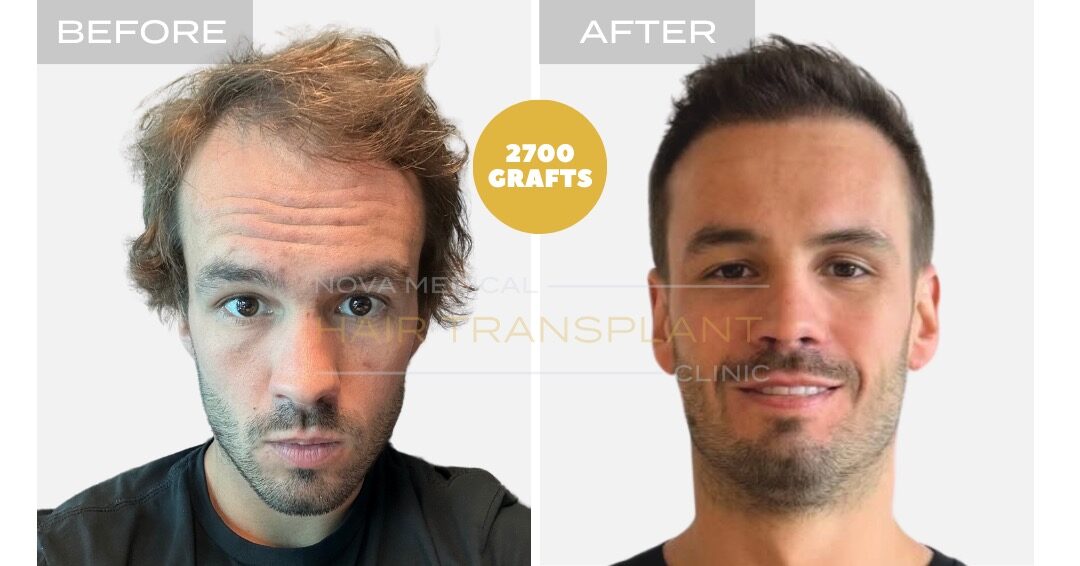
The target is simple: hair that feels like your own and does not look done. New growth usually appears three to four months after surgery and the full result settles in around 9 to 12 months, so a plan is judged on how it looks a year later, not on the day itself.
Benefits of a Hair Transplant in Tennessee
Your Own Hair, for the Long Term. One of the main advantages of a hair transplant in Tennessee is that the transplanted hair comes from your own scalp, so once it grows in it looks and behaves like the rest of your hair. Follicles taken from the donor zone tend to resist the hormone-driven thinning that affects the top of the head, which is why many patients see it as a way to invest once rather than keep paying for temporary fixes.
Convenience Over Time. Wigs, hairpieces and concealers need ongoing upkeep. Transplanted hair can be washed, cut and styled like any other hair on your head, which makes it a practical choice for patients who want a more permanent answer to hair loss.
A Plan Built Around You. At Nova Medical Hair Transplant Tennessee, every procedure is tailored to the individual. Whether the concern is a receding hairline, crown thinning, patchy facial hair or isolated bald patches, the treatment plan is built around your goals and your donor characteristics, with each graft placed to match your natural angle and direction of growth.
Long-Term Value. The upfront cost of a transplant is higher than short-term treatments, but many patients value a result that keeps growing naturally year after year. That lasting value, together with the confidence that often returns with a fuller hairline, is a big part of why more people in Tennessee are considering hair transplantation.
Limited Downtime. FUE is minimally invasive, and recovery is usually shorter than first-time patients expect. Most people are back to regular day-to-day activities within a few days, and the full healing timeline is set out further down this page.
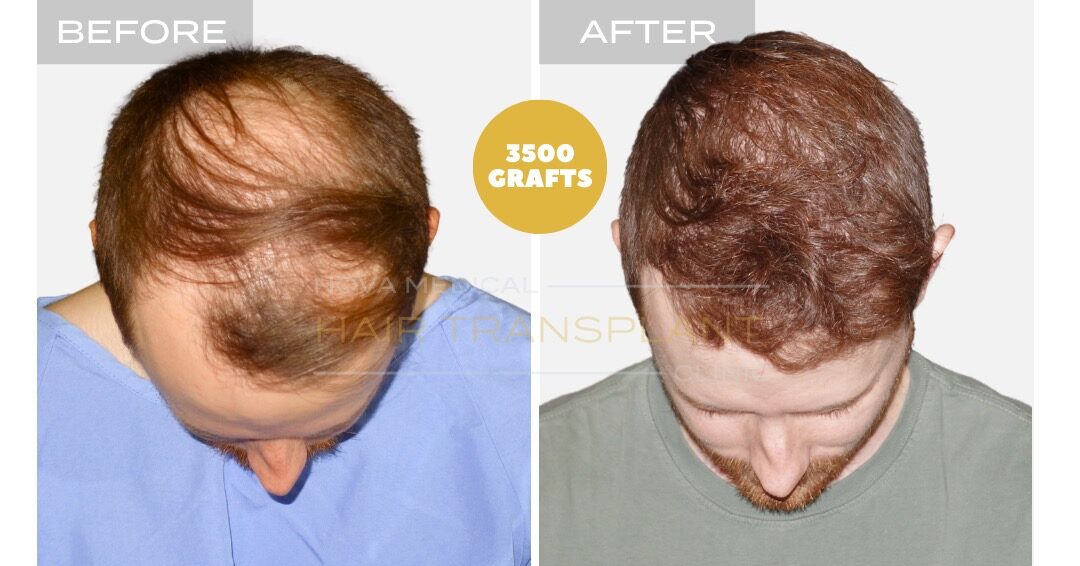
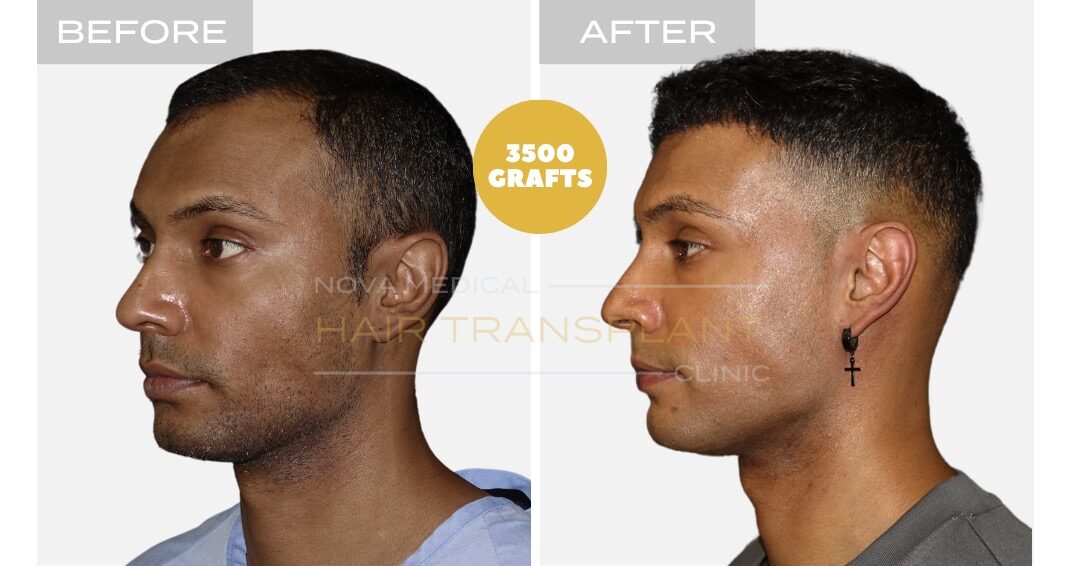
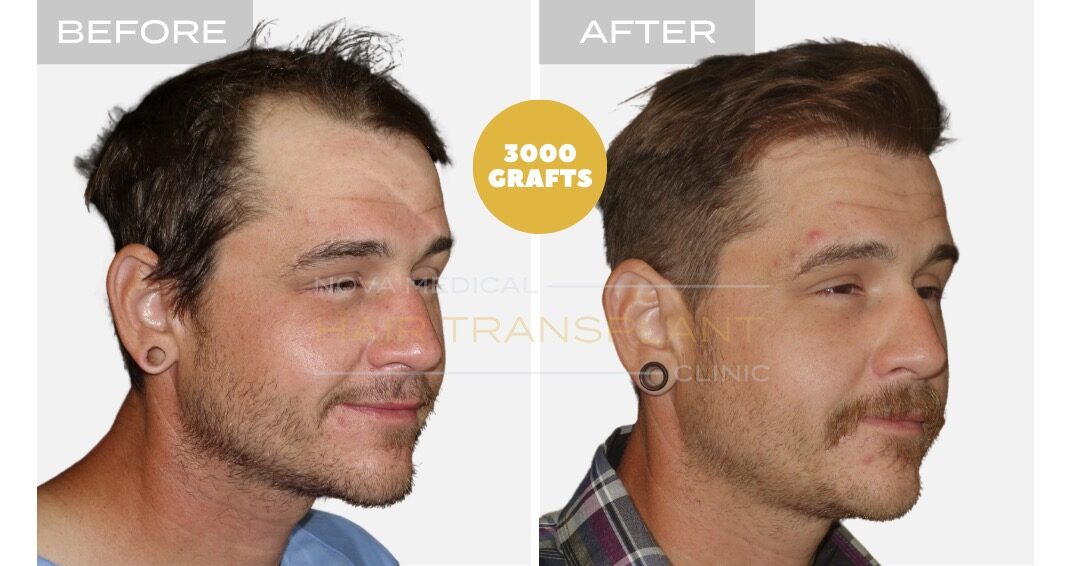
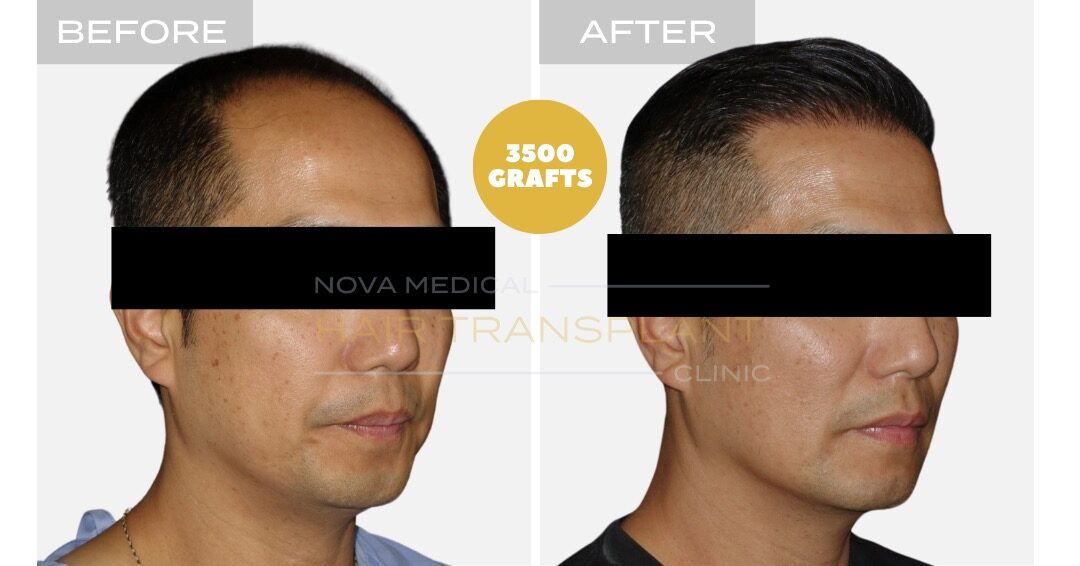
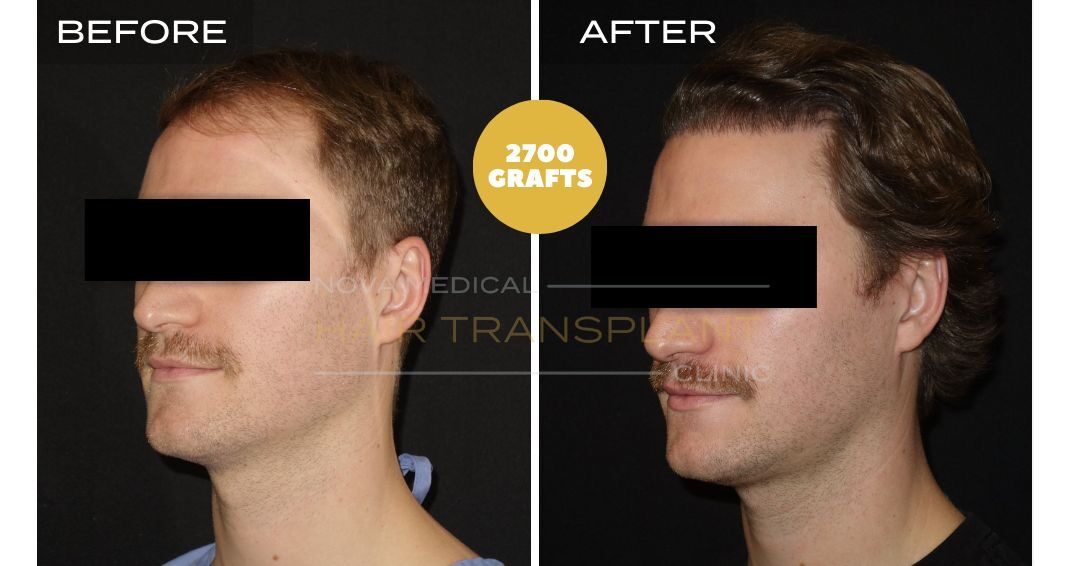
Before & After Gallery
What is DHI?
Direct Hair Implantation (DHI) is a variation of FUE. Grafts are still harvested one by one from the donor area; what changes is how each graft is returned to the scalp.
Instead of creating all the recipient openings first, the team loads every follicle into a slim, hollow implanter shaped like a pen. One press into the skin both forms the site and sets the graft, which gives fine control over depth and angle as the work progresses.
Supporters of DHI point to grafts spending less time out of the body and being touched fewer times. Whether that makes a meaningful difference for you depends on how large the area is, the type of hair you have and the density you want to reach.
The instrument is only one factor. Careful planning, gentle graft handling and an experienced team matter more, so if DHI appeals to you, raise it during your Nashville consultation and Dr. Dan Hatef can weigh it against the plan recommended for your case.
How DHI Works
DHI starts with the same evaluation as every other transplant at the clinic: how dense the donor area is, where the thinning sits and the result you are picturing.
On the day, the areas being treated are numbed, follicles are taken out individually, and each is loaded into an implanter and placed straight into the thinning zone, so extraction and implantation progress side by side.
Healing and growth follow the same course as standard FUE. Small crusts clear within about two weeks, new hairs typically begin to show after a few months, and the finished look develops over roughly a year, with follow-up visits in Nashville along the way.
DHI vs. FUE
DHI and FUE (Follicular Unit Extraction) share the same harvesting method, so the comparison really comes down to how the grafts are implanted.
In conventional FUE, every recipient opening is created across the treatment area before placement begins. It is a flexible, well-studied method that leaves only tiny dot scars in the donor zone, which suits patients who want a discreet result and a quick return to work and social plans.
DHI merges site creation and placement into a single step with the implanter. That can help when grafts need to sit tightly along the hairline, although sessions tend to take longer and depend heavily on the skill of the team handling the grafts.
Neither method is right for everyone. At Nova Medical Hair Transplant Tennessee, the decision follows your assessment and rests on donor supply, hair characteristics and goals, and Dr. Dan Hatef signs off on the final plan.
What is FUE?
FUE, or Follicular Unit Extraction, is a modern hair transplant technique that removes individual follicular units from the back or sides of the scalp without creating a long linear scar. A very small punch tool is used to extract the grafts, leaving tiny marks that generally heal quickly and are difficult to notice.
Because there is no strip incision, many patients appreciate the flexibility FUE offers, especially if they prefer shorter hairstyles. The extraction stage takes time, yet FUE remains one of the most popular methods for achieving natural-looking, long-term restoration.
At our Nashville clinic, FUE is carried out under local anesthesia. Because each graft is removed and placed on its own, the team can control the angle, depth and position of every follicle, which helps the new hairline sit naturally beside existing hair.
FUE works across many hair textures, including straight, wavy, curly and coily hair. It is also widely used for eyebrow restoration and beard transplants, and for patients who want a minimally invasive approach with limited downtime. That precision and versatility make it a strong option for many people seeking hair restoration in Tennessee.
What is FUT?
FUT, or Follicular Unit Transplantation, is a hair restoration technique in which a thin strip of donor scalp is removed from the back of the head, where hair is typically more resistant to loss. The donor area is then carefully closed to keep scarring as discreet as possible.
That donor strip is separated under a microscope into naturally occurring follicular units, usually containing one to four hairs per graft. These grafts are then placed into thinning or balding areas following the natural angle and direction of growth to create a realistic result.
Because a single strip can yield a large number of grafts, FUT is often considered when extensive coverage is needed in one session. The trade-off is a fine linear scar at the back of the scalp, which is usually hidden by the surrounding hair as long as it is not cut very short.
For patients with advanced thinning who keep their hair at a medium length or longer, FUT can be an efficient and permanent way to restore coverage.
Want to compare the two techniques in more depth?
But your hair can be
Your own donor hair, moved to where it is needed, with a plan drawn up in Nashville.
Request a Free Consultation
No obligation • Free assessment
Hair Transplant Procedure Overview
~2 minutes readYour hair restoration journey starts with choosing a Tennessee clinic that approaches treatment with care, experience and attention to detail. Most patients begin with a free assessment in Nashville, or by sending photos ahead of time. Call or text (629) 210-3777 to arrange a time that works for you.
At Nova Medical Hair Transplant Tennessee, every procedure begins with a comprehensive consultation and a personal treatment plan built around your goals, your pattern of hair loss and your donor supply. Expect a relaxed conversation about when the loss began, what you have tried so far and the result you have in mind.
The team reviews your medical history and any prior procedures. Bring a list of medications, supplements and topical products, and if you have had a transplant somewhere else, we will review that earlier work so the new plan builds on it.
A physical assessment follows. Density, texture, hair caliber and the pattern of loss are evaluated under magnification, along with the contrast between hair and skin tone, so the team can confirm candidacy and recommend the most appropriate approach.
If you are a good candidate, you receive a written estimate with the graft count, technique and price, and the surgical plan is finalized when the procedure is scheduled. On treatment day you arrive in the morning, change into comfortable clothes and go over the plan and your expectations with the team before anything begins.
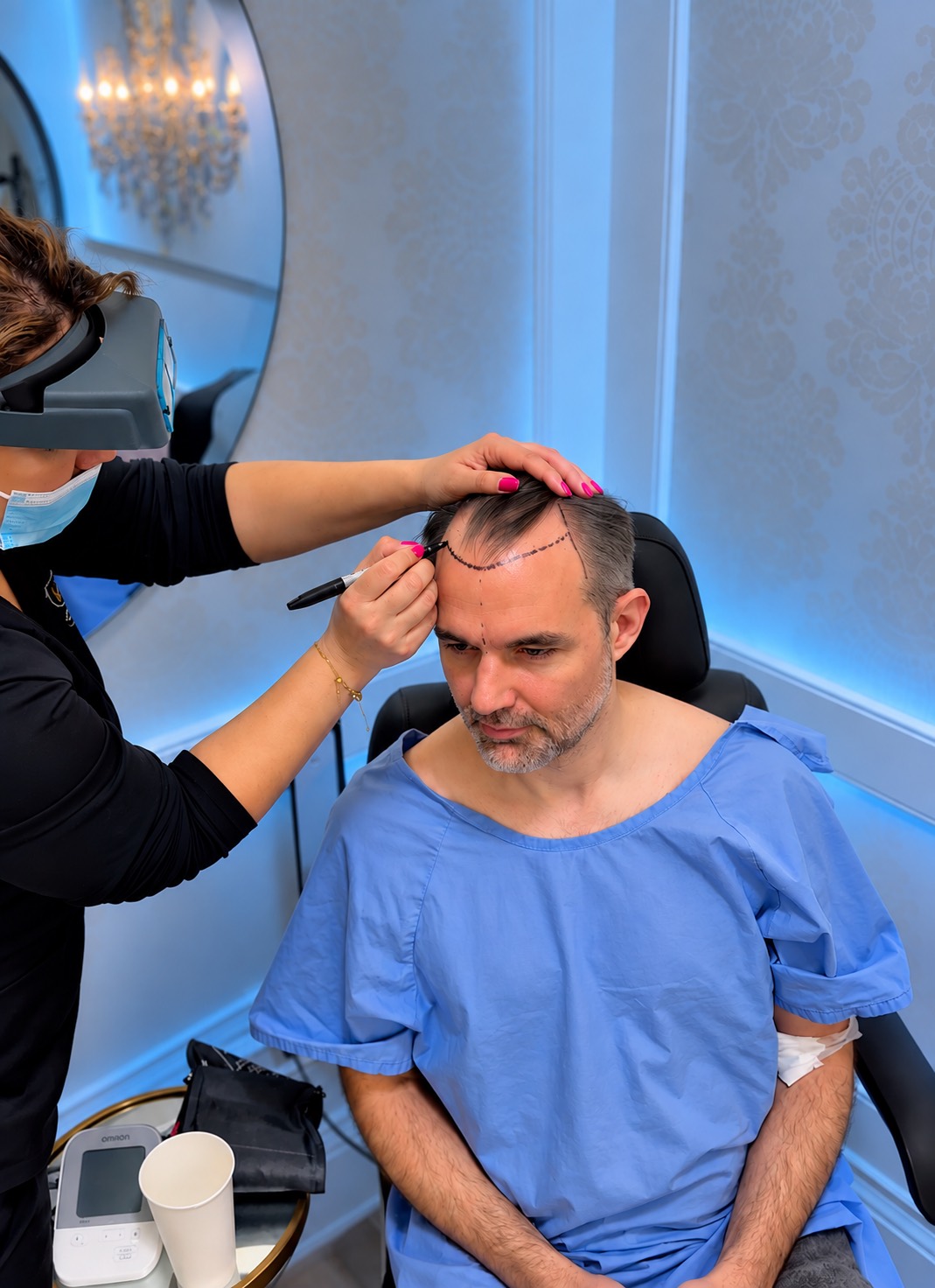
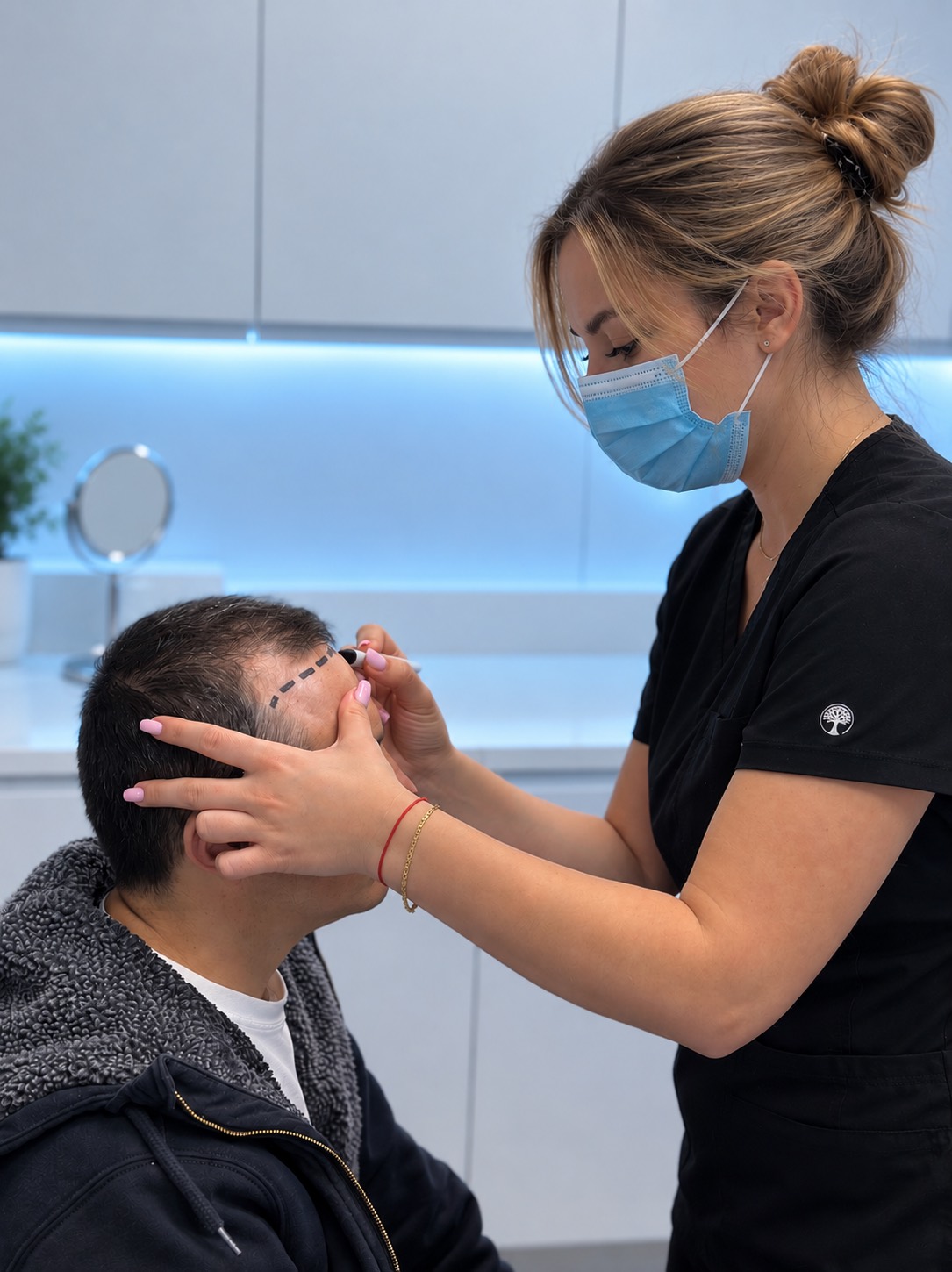
The design phase comes next. An existing hairline is restored or a refined new one is drawn, based on your anatomy and long-term goals, and you can follow along in a mirror and request adjustments. Natural balance, density and an age-appropriate shape are the priorities, and photos from several angles record your starting point.
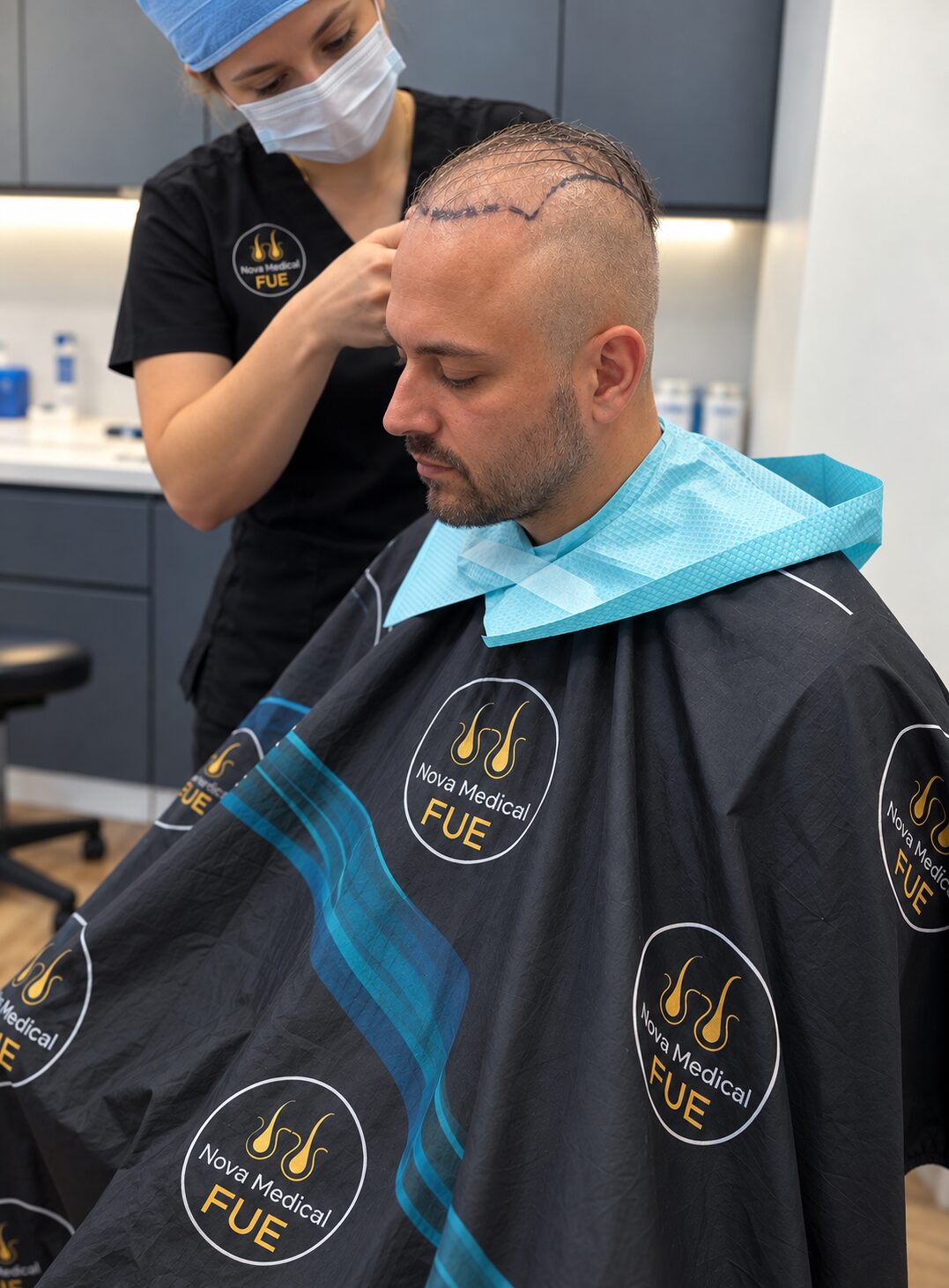
Preparation depends on the technique. For FUE, the donor area is typically trimmed short for extraction; for FUT, only the strip area is prepared. Once local anesthesia numbs the scalp, most patients notice pressure rather than pain.
Graft harvesting then begins. In FUE, follicles are removed individually through tiny round openings; in FUT, one strip is taken, the donor edges are closed and the strip is divided into follicular units under a microscope.
Each graft is counted and sorted by the number of hairs it carries, then kept cool and moist until it is needed. Single-hair grafts are reserved for the front edge, and grafts with two or more hairs go just behind it to build density.
Throughout harvesting, patients can relax, listen to music or rest while the team works carefully through the extraction. Some people doze off for part of it.
Breaks are part of the day. If you need to stand up, stretch or have a snack, let the team know and they will pause.
After harvesting, every graft is checked again under magnification, and only healthy, intact units move on to placement.
Tiny recipient sites are then created and grafts are positioned to follow the natural direction, spacing and density of your hair, with softer spacing at the front edge and tighter packing where coverage matters most, so the result looks balanced and believable.
Most patients are surprised by how manageable the day feels. You sit up during placement, so chatting or watching something is easy, and you go home with written aftercare and a follow-up schedule. To see how outcomes develop, explore our before and after gallery.
Hair Transplant Recovery & Hair Growth
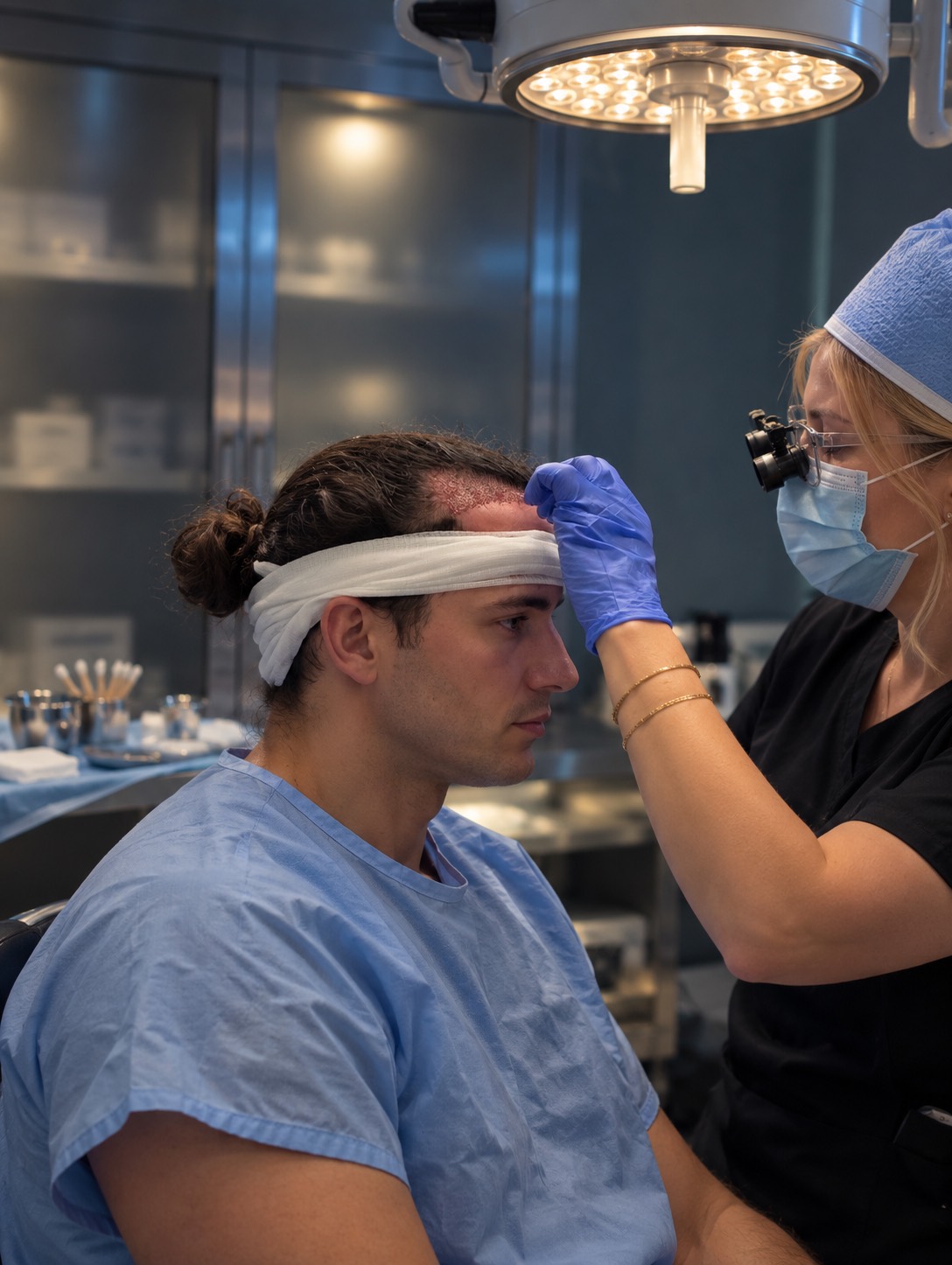
After your procedure at Nova Medical Hair Transplant Tennessee, most patients leave the clinic without heavy bandaging and travel home comfortably the same day. The treated area is visible straight away, but the full outcome develops gradually, and following the aftercare plan closely supports a good result.
The First Week: Mild swelling, redness and tenderness around the donor and recipient areas are normal and usually ease within a week. Small scabs form around the new grafts; leave them alone rather than picking or scratching. You receive detailed post-operative instructions tailored to your procedure, which may include medication for swelling and discomfort, advice on sleeping position and how to wash the scalp gently. Many people return to work and light daily activities within a few days, while exercise, swimming and other strenuous activity usually wait one to two weeks so the grafts can settle.
Shedding (Weeks 2-3): Two to three weeks after surgery, many of the transplanted hairs fall out. This temporary stage, often called shock loss, can be unsettling, but the follicles remain in place beneath the skin and are getting ready to produce new hair.
Early Growth (Months 3-4): New hairs begin to appear around three to four months after the procedure. They often start out fine and wispy, then thicken over the following months as density and fullness steadily improve.
Final Result (Months 9-12): Between 9 and 12 months, the transplanted hair reaches its finished look, blending with your natural hair and giving a fuller appearance.
The transplanted hair keeps growing naturally, giving many patients a long-term way to restore coverage and confidence.
Caring for Your Hair in the Years Ahead
Once the grafts have settled, a gentle routine still helps. Choose a sulfate-free shampoo, limit bleaching and chemical relaxers, and wear a hat during long stretches in strong sun. Some patients also book PRP sessions to support the native hair surrounding the transplant.
Occasional follow-up visits at the Nashville clinic let the team compare fresh photos against your original baseline and spot any new thinning early.
Overall health plays a part as well. Adequate protein, iron and sleep, and avoiding smoking, help both the hair you were born with and the grafts that were moved.