
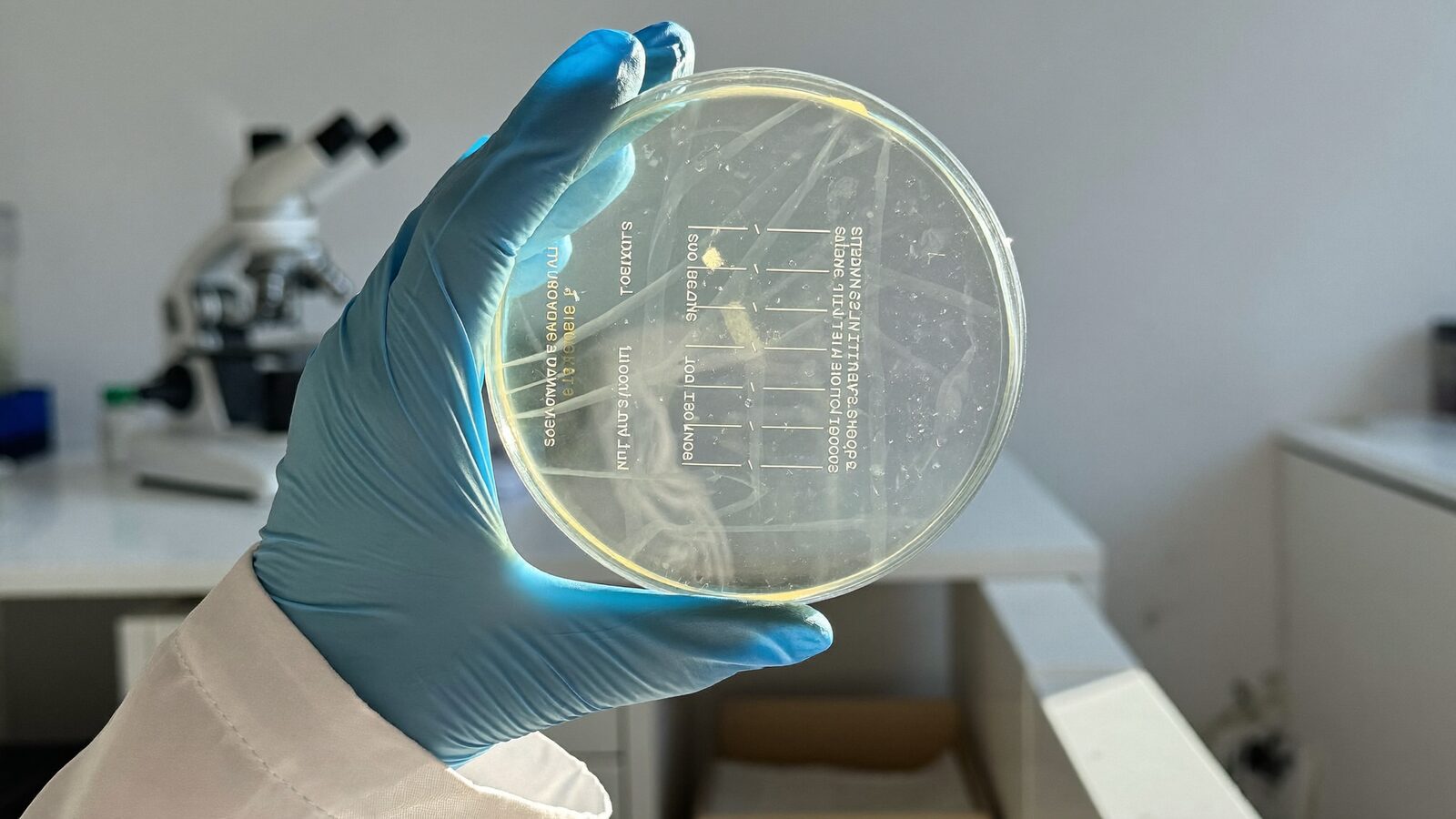
A stem cell hair transplant, in the sense most ads imply, does not exist yet: no clinic can grow new follicles from your cells and implant them into a bald scalp. What clinics sell today under the stem cell label are injections of processed fat, cell extracts or exosomes, which are still being studied and are not approved by the FDA as hair loss treatments.
That gap between the headline and the reality is what this guide is about. We will separate the lab work that may one day multiply donor hair from the products marketed now, and explain why moving your own follicles with a manual FUE hair transplant remains the method with a long, predictable track record. Nova Medical Hair Transplant Tennessee does not offer hair cloning or stem cell treatments, and we will be clear about why.
Key takeaways
- Hair cloning, meaning growing new follicles in a lab and implanting them, is still research and is not available at any clinic in the United States.
- Products sold as stem cell hair treatments are usually fat-derived cell injections or exosome serums that have no FDA approval for hair loss.
- A hair transplant moves follicles that already exist, so it adds hair to bald areas instead of trying to wake up follicles that are gone.
- PRP, made from your own blood platelets, is a separate, non-experimental option that some patients use to support thinning hair.
- Any promise of unlimited donor hair or regrowth without surgery should be treated as a warning sign until published trial results say otherwise.
What does hair cloning actually mean?
Hair cloning means taking a small sample of a patient's own follicle cells, multiplying those cells in a laboratory, and implanting them so they grow brand new hairs. If it worked reliably, a person's donor supply would stop being a fixed number. Hair cloning remains a research goal in 2026, not a treatment anyone can book.
The cells researchers focus on are dermal papilla cells. The dermal papilla is a tiny cluster at the base of every follicle that acts like a control center, sending the signals that tell the follicle to build a hair shaft. In theory, if you could expand those cells by the thousands, you could seed new follicles almost anywhere.
The trouble is that dermal papilla cells tend to forget their job once they are grown in a flat dish. After a few rounds of multiplication they lose much of their ability to trigger hair growth. Labs have tried culturing them in small three-dimensional clumps, pairing them with skin cells, and printing scaffolds that mimic the shape of a follicle. Some of these approaches have produced hair-like structures in animal models and in tissue samples.
Stem cell therapies on offer today: what is in the syringe
Stem cell hair treatments sold today are mostly injections made from your own fat or from donated tissue, processed in a clinic or a lab and injected into the scalp. Stem cell hair products aim to stimulate existing follicles, not create new ones, and none are approved by the FDA to treat hair loss.
When you read the fine print, the offers tend to fall into a few groups:
- Fat-derived cell injections: a small amount of fat is taken with liposuction, spun or filtered, and the resulting cell mixture is injected into thinning areas.
- Exosome serums: tiny particles released by cells in culture, sold in vials and injected or applied after microneedling. They contain signaling molecules, not living cells.
- Cell-free extracts and conditioned media: fluids collected from cultured cells, marketed as growth factor treatments.
- Bone marrow or other tissue sources: less common, more invasive, and still investigational.
Every one of these is aimed at follicles that are miniaturizing, which means shrinking and producing thinner, shorter hairs over time. None of them can bring back a follicle that has fully scarred over or disappeared. That is why a shiny scalp at the crown does not respond to injections the way a thinning but still active area might.
Regulation note: The FDA has publicly warned consumers about unapproved stem cell and exosome products. A clinic offering them for hair loss is usually doing so outside any approved indication, so ask exactly what is being injected, where it was made and what evidence supports it.
What does the research show so far?
Research on stem cells for hair loss shows real scientific promise but limited clinical proof. Early trials of fat-derived cell injections and related products report modest gains in hair density for some patients, yet the studies are usually small, short, and hard to compare because each one prepares the cells differently.
A few patterns come up again and again when you look at this body of work:
- Small groups of patients: many trials enroll a few dozen people or fewer, which makes it hard to know who will respond.
- Short follow-up: results are often measured at three to six months, while hair loss plays out over years.
- No standard recipe: one study's injection may contain a very different mix of cells and proteins than the next, so a good result in one trial does not transfer to a product sold elsewhere.
- Thickening, not regrowth: the most consistent finding is that existing hairs may become somewhat thicker. Bald areas are not refilled.
On the cloning side, laboratory groups have shown that follicle-forming cells can be coaxed into producing hair in mice and in human skin grafted onto animals. Turning that into a safe, affordable procedure for people is a separate challenge. Researchers still need to control hair direction, color, thickness and growth cycle, and prove that lab-grown cells do not carry long-term risks. Honest estimates for widespread clinical use are measured in years, and nobody can promise a date.
Where each option stands today
The options marketed for hair loss range from proven surgery to early laboratory science. Comparing them side by side, by what each one actually does and how much evidence supports it, is the fastest way to see which belong in a treatment plan now and which are worth watching from a distance.
| Option | What it does | Evidence today | At our Nashville clinic |
| Hair transplant (FUE or FUT) | Moves permanent follicles from the back and sides to thinning or bald areas | Decades of clinical use, predictable growth timeline | Offered |
| PRP injections | Concentrated platelets from your blood applied to the scalp to support existing follicles | Widely used, results vary from person to person | Offered as a separate treatment |
| Fat-derived stem cell injections | Processed fat cells injected to stimulate weakening follicles | Small early trials, no FDA approval for hair loss | Not offered |
| Exosome products | Cell-free signaling particles injected or applied after microneedling | Very limited human data, FDA consumer warnings | Not offered |
| Hair cloning | Lab-multiplied follicle cells implanted to form new hairs | Laboratory and animal research only | Not available anywhere |
Notice that the two options with a clear track record work in very different ways. A transplant relocates hair. PRP supports hair that is still growing. Our PRP treatment for hair loss in Tennessee is sometimes used on its own for early thinning and sometimes alongside surgery, and the article on timing PRP around a hair transplant covers how those two are combined.
Red flags in stem cell marketing
Stem cell hair marketing often borrows the language of a breakthrough while skipping the evidence. Warning signs include promises of full regrowth without surgery, unlimited donor hair, results that are said to be permanent after one session, and vague answers about what is actually injected or where it was made.
If you are comparing offers, watch for these specific phrases and practices:
- "No donor limits": no available treatment creates new donor follicles. A clinic implying otherwise is selling a hope, not a result.
- "FDA registered" or "FDA compliant": registration of a lab or facility is not the same as approval of a treatment for hair loss.
- Before-and-after photos with changed lighting or wet hair: styling, camera angle and hair fibers can make thinning look very different.
- Large upfront packages: paying for many sessions in advance, before any response is measured, puts the risk on you.
- Pressure to book quickly: limited-time pricing has no place in a medical decision about your scalp.
- Bundling with a transplant: some offers add stem cell injections to surgery as a way to boost graft growth. Ask what evidence supports the add-on and what it costs on its own.
A good test is to ask any provider three questions: What exactly is in the injection? What results have been published for that exact product? What happens if I see no change after the sessions I pay for? Clear, specific answers are a good sign. Vague ones are not.
What works now for thinning and bald areas?
For areas that are already bald or very thin, a hair transplant is the option that works now, because it moves follicles that are genetically resistant to pattern hair loss. For earlier thinning, medication and PRP can help protect the hair you still have, and many patients combine these approaches over time.
Follicles from the back and sides of the scalp usually keep growing for life, even when they are moved to the front or crown. That is the reason transplanted hair tends to hold up over the long term, which our post on how long hair transplant results last explains in more detail. The limit is supply: the donor area holds a fixed number of follicles, so planning matters as much as technique.
At our hair transplant clinic in Nashville, grafts are extracted by hand with fine handheld FUE instruments by the surgical team, under local anesthesia, and patients go home the same day. Up to about 4,000 grafts can be moved in one day when donor density allows, while reserve is kept for future loss. Dr. Dan Hatef reviews and approves every plan, designs the hairline with the patient and oversees the procedure.
A typical timeline for transplanted hair
Transplanted hairs usually shed within the first few weeks, a normal phase called telogen, when follicles rest before producing new hair. New growth commonly starts around month three or four, and most patients see the bulk of the result between nine and twelve months, with some maturing for up to eighteen months.
Should you wait for hair cloning before acting?
Waiting for hair cloning rarely makes sense if hair loss is bothering you today. Pattern hair loss tends to progress, and follicles that shrink away completely cannot be restored by any current treatment. Protecting existing hair now, and planning surgery carefully, keeps more options open whenever new science does arrive.
A transplant does not close the door on future treatments. If a proven cell-based option becomes available years from now, it would most likely work alongside the follicles you already have, including transplanted ones. In the meantime, a thoughtful plan that respects your donor area leaves room for those choices.
If you want a quick primer on the questions patients raise most at a first visit, our hair transplant FAQs for Nashville patients collects them in one place. For a personal answer, a free assessment at our Nashville clinic measures your donor density and looks at your pattern of loss, so you can weigh surgery, PRP or simply monitoring with real numbers in front of you.
Get a Straight Answer About Your Hair Loss
Skip the hype and see what your donor area can actually support. Book a free assessment at our Nashville clinic and leave with a clear, written plan.